Whisking it Up – Whisk, Mira Hotel

With their face lift and rebranding now fully complete The Mira Hotel has emerged as a top contender forHong Kong’s most stylish hotel, and Whisk is the latest and greatest outlet just recently launched in the property.

When one sees the curvaceous exterior and enters the ethereal realm that is the lobby of the freshly refurbished Mira Hotel one can immediately tell that this is no ordinary property. Reincarnated and renamed as The Mira Hotel, the 51-year-old Hotel Miramar has been reborn after a hefty metamorphosis. A hotel modernization would not be complete without contemporary food and beverage outlets, and The Mira boasts plenty, with Whisk coming in as the dining climax of the hotel.

Whisk is the high point of the Mira’s dining outlets for a number of reasons, but the one that we’re going to start on is the connecting terrace – just because we like it best, and because it is a rarity to have such a substantial outdoor area inHong Kong. While the terrace is technically part of Vibes – Mira’s outdoor bar cum lounge – it is still joined to Whisk (with 20 outdoor seats) and is part of the lush view that gives Whisk’s interior its extra appeal. With exquisite landscaping consisting of eye-catching fire, water and green features, the 4,000 square-foot open-air space is an al fresco haven, complete with barbeque-tapas and innovative drinks. There is also a DJ booth, rattan cabanas and plenty of bamboo, frangipani trees and many more plants to help one get in touch with their green side.

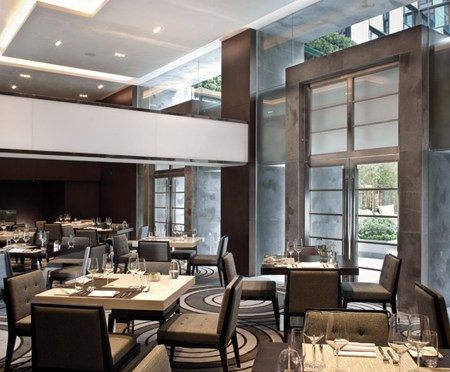
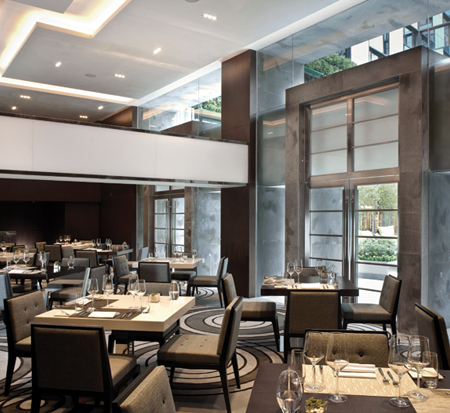
However, the terrace is but a small ingredient adding flavour to Whisk’s overall scrumptiousness, because inside things hot up all the more so. The interior design was overseen by the international interior stylist Charles Allem of CAD Associates, and – having designed exclusive residences, hotels and commercial spaces in places like Palm Beach, Las Vegas, New York, and Bel Air – he shows what he is good at, with atmospheric lighting, frequent spots of natural light and lively retro circular-patterned carpets patterns giving Whisk an uplifting yet unpretentious feeling. With monochromatic black, greys and platinum silvers, circularly galaxy-like chandelier fixtures and plenty of nonstandard low-slung dining chairs, there is a cosmically retro vibe to the interior, but enough touches of elegance keep the space sophisticated and formal. There are various areas to the restaurant, with a barcode-patterned bar greeting one upon entry, a mezzanine area complete with views over Kowloon Park, two cosy private rooms and, of course, the main dining room, which connects up to the terrace.

The good taste doesn’t stop at the interior, with a menu assembled together by Justin Quek, a European chef trained under many Michelin-star eateries throughoutEurope. Quek’s specialty is French fare sprinkled with a touch of orientalism – a forte that he perfected when he was at the widely acclaimed French establishment, Les Amis, inSingapore. At Whisk he brings in a few more European flavours and refines a number of Asian favourites, with items like roasted crackling suckling pig and baked Miso Marinated Cod. In addition there are plenty of juicily fresh seafood options, plus a cellared selection of carefully selected European wines. If these features aren’t reason enough to check out this new establishment then you’re either still feeling the economic pinch of 2009, or simply suffering from cibophobia (totally true definition; fear of food).

Originally published in Today’s Living magazine, February 2010

PDF

Boutique Restoration – The Waterhouse, Shanghai

Proving once again that Shanghai has a better idea of heritage preservation than Hong Kong, The Waterhouse is another boutique design-led commercial restoration project that has rocked the economic powerhouse in the mainland.

As the pride and joy of Shanghai, the Bund has always played an important role in the city, and held a special place in the heart’s of residents. Back in the day the riverside strip was home to trading firms and financial houses, and further along there were factories and working houses. Now, all those places have long-gone, and as gentrification sets in, many of the interesting Art Deco edifices are being done up and converted into unique commercial projects. The Waterhouse is precisely one of these and, as the most recent and possibly most attractive addition to the area, the boutique hotel is already turning heads.

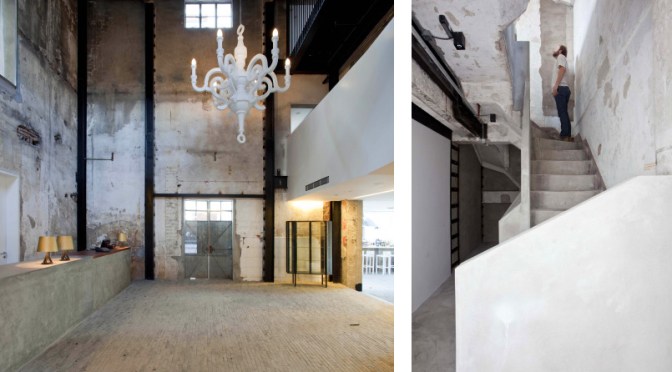
Designed within a restored 1930s Waterhouse, this boutique hotel project was destined to stand out from the start. Much of the original Art Deco appeal has been retained, and the internal and external spaces stylishly merge together with designer furnishings throughout. Looking onto the public areas of the hotel is a bit disorientating, but the guest rooms all have adjustable shutters faced with mirrors. There are 19 rooms in total, and these have each been designed differently, but collectively together all still ooze the same rustic designed chic. With designer furnishings clashing with rustic bare walls, dated fixtures and copious amounts of space, there is a distinct sense of minimalism – the kind commonly found on the pages of Wallpaper Magazine.

The hotel was designed by the Shanghai-based Neri & Hu design firm, and they choose to keep many of the original fixtures, with bare walls cropping up alongside dated oxidized fixtures. The hotel is also home to one of the largest authentic collection of designer furniture in any hotel inChina, with the management and designers having thoughtfully selected works by leading designers and legends such as Arne Jacobsen, Finn Juhl, Hans Wegner, Antonio Citterio and more.

Of course, a designer hotel would be nothing without some tempting dining options, and these come in the form of Table No. 1, The Roof and the Lounge, which together form quite the alliance. While the formal European restaurant Table No. 1 boasts a sleek and simplistic interior, with select glimpses into hotel rooms and onto the street; The Roof and the Lounge are more informal, with the Lounge coming complete with a fireplace and books, and the wooden-decked rooftop bar providing stunning views of the Huangpu River.

Originally published in Today’s Living magazine, August 2010

PDF

Spas with a Difference

With the highest percentage of spas per square mile in the world, Thailand – that timeless land of sea, sand and sun – is pretty much synonymous with pampering and is known to have the best health resorts in the world. But such profusion results in a glut of choice which makes deciding on a place to spoil oneself a chore in itself. Like hedging a bet certain places have more appeal than others, with some having superior design and others boasting better treatments. So whether you’ve bitten the bullet and laid a wager or not, our carefully-selected list of top 10 Thai spas should obligingly assist you in your pampering quest and hopefully guide you to the money.


Chiva-Som is a place where relaxation and rejuvenation are an obligatory prerequisite. Over the past 15 years this self-professed ‘destination spa’ has racked up a considerable number of awards for good reason. Guests don’t come here to be spoilt by your conventional body massage – they come here to escape, to be revitalised and to be healed. Upon check-in, personalised programmes and treatments are designed for all visitors and, blending Eastern philosophies with Western diagnostic skills, these are then followed through for the course of the visit. The resort also specialises in healthy spa cuisine, with many organic ingredients even grown on site.
In a Nut Shell:
58 rooms and suites, 70 treatment rooms, a kinesis studio, a gym, a Watsu pool, a flotation pool, an outdoor swimming pool, a bathing pavilion with a Kneipp bath, a sauna, steam room, Jacuzzi and an indoor swimming pool all set on a picture-perfect seven-acre plot on the water’s edge of Hua Hin.
What sweetens the kitty:
There are over 150 specialist treatments on offer with the on-site Niranlada medi-spa even offering Botox and laser skin rejuvenation.

Dheva Spa, Chiang Mai

Considering this place is named after the goddess of spiritual enlightenment, the vast collection of accolades it has managed to rack up really come as no surprise. Dheva Spa is set amidst lush tropical environs in the secluded grounds of Mandarin Oriental Dhara Dhevi. With a rustic and exotic sensibility, the palatial 3,100 square-metre sanctuary is modelled on an ancient Mandalay palace and at the heart there lays an exquisite seven-tiered roof which symbolises the seven steps needed to attain nirvana. During construction, 150 specialised Chiang Mai artisans worked on the spa for a period of three and a half years, and authentic sculptures and carvings now scatter the resort. It is against this backdrop that the first-class rituals and treatments are carried out, performed in tranquil treatment rooms complete with Thai silks, polished teak wood and marble tiles.
In a Nut Shell:
More like a wellness compound or a mini-resort in its own right, Dheva Spa has 18 treatment suites plus a modern fitness centre. On site also are private colour therapy whirlpools, steam rooms, an Ayurvedic centre, and even an Aquatherapy area complete with a hydrotherapy room, a Vichy shower, a heated scrub table, a Hammam, a Rhassoul and a Watsu pool (Google is your friend ). There is also a herbal garden featuring organic herbs that are used in treatments and in meals.
What sweetens the kitty:
Although they specialise in exclusive Northern Thai treatments and offer some of the best Ayurvedic treatments in the world, the full range of treatments are drawn from three continents, with their origins spanning over 4,000 years, including all sorts of exotic hard-to-pronounce treatments.

Away Spa – W Retreat Koh Samui

W Retreat Koh Samui is not only W’s first foray into the Thai hotel market, but it is also their first entry into the Thai spa scene – and what an entrance it is! Following the concept of their pre-existing AWAY® spas, the ease-inducing venue is full of W’s signature idiosyncrasy and hipness, with refreshingly bright, naturally-illuminated interiors standing out in stark contrast to the average gloomy treatment room on offer at cookie-cutter spa joints. With a fair balance between indoor and outdoor spaces, there are seven creatively-named treatment rooms (i.e. ‘Thaim Out’) nestled within five luxurious pavilions.
In a Nut Shell:
Adorned with neutral colours and natural materials, the interior has a distinct sense of calmness and coolness, which is complemented by playful scents, imaginative sounds and energising light. The spa boasts Asia’s first Thaimazcal® treatment facility which fuses local Thai spa ingredients with Mexican tribal rituals (exfoliation under a waterfall anyone?). There is also a nutrient-supplying juice bar called Tonic.
What sweetens the kitty:
There are an equal number of progressive and traditional treatments available here. Some of the more interesting offerings include combination massages, healing body wraps, purifying facials and couple packages. There are also manicures, pedicures, yoga and detoxifying programmes.

Banyan Tree Phuket

A spa article would not be complete without some reference to Banyan Tree, who are a group of firsts. They not only pioneered the Asian luxury spa resort concept, but they can also be credited as the creators of the pool villa. With award-winning resorts now sprinkled all around Asia and the world, these comfort specialists know what they are doing. For evidence of this one need look no further than their flagship destination resort, which started it all – Banyan Tree Phuket. While perfect as a resort, it is even better as a spa, but the two concepts blur into one here, where there are 150 exquisite villas in six different categories. The highlights of the accommodation offerings are the Double Pool Villas and the Spa Pool Villas, which feature bedrooms surrounded by lily ponds, private steam rooms, outdoor sunken baths, swimming pools and jet-pools. Oh yeah, and did we forget to mention the well-equipped spa itself is one of the best in Phuket, if not the whole of Thailand?
In a Nut Shell:
While one would certainly come here for the specialist treatments and expert therapists, it is really the top service and lush environs that make it what it is, with elegant open-air pavilions, serene lagoons, and lush coconut groves and gardens being the perfect backdrop for a perfect pampering.
What sweetens the kitty:
The fineness of the Banyan Tree spa experience is in the training of its spa therapists. With all the therapists having undergone training at the Banyan Tree Spa Academy Phuket one can be sure they are, literally, in good hands. Touting their resort as a place for physical, mental and spiritual renewal, Banyan Tree focuses on a non-clinical and holistic approach to their treatments, emphasising a ‘high-touch, low-tech’ approach that takes a lot of influence from traditional Eastern healing therapies.

Six Senses Sanctuary, Phuket

Building on more than 15 years of experience as a global pampering leader, the aptly named Six Senses Sanctuary really is sensational in every sense of the word. Covering an area of over 3,000 square meters, it is the only resort on Naka Yai – a picturesque island covered in pristine beaches of fine white sand and shady coconut groves located a mere 25-minute drive and five-minute boat ride away from Phuket Airport. The convenient travel time is nothing compared to what is on offer though, as the resort specialises in multi-day integrated health programmes which focus on preventative wellness and lifestyle-enriching programmes and treatments.
In a Nut Shell:
Guests don’t come to the Six Senses Sanctuary for massages. They come here to get healed and back into balance. It is more of a place to help one through a mid-life crisis or reassess their entire existence (in a good way). As they state themselves, it is a destination spa to provide “a cocoon of nurturing surroundings to help cultivate wellness, where guests are transformed – like caterpillar to butterfly – toward a new stage in life.”
What sweetens the kitty:
Assimilating Indonesian, Indian, Thai and Chinese healing traditions, Six Senses Sanctuary centres on therapeutic and curative therapies which aim to balance the mind and calm the spirit. Japanese treatments can also be found, on offer alongside a diverse array of treatments such as Chinese acupuncture, Ayurvedic massages and more.

Four Seasons Resort Chiang Mai

Although the golden triangle is recognised as a main production centre for a certain type of psychedelic drug, there are plenty of other more natural ways to get high here, and the experts at the Four Seasons Resort Chiang Mai are some of the best suppliers to go to for this. With spacious exquisite Lanna-style pavilions overlooking terraced rice fields and mountains in the beautiful Mae Rim Valley, the distinctive location of this resort puts one in a relaxed state of mind before they have even checked in. Disguised as a traditional village of northern Thailand, this resort has acclimatised to the culture perfectly, and one can feast on authentic Thai dishes, explore traditional artwork and experience some textbook treatments from masterful therapists – all in the same day.
In a Nut Shell:
Surrounded by rice paddies and frequented by the resident hotel water buffalo (who may or may not be able to give massages), this is a place of absolute tranquility. The top-notch Garden Pavilion rooms have deep-soaking tubs and outdoor salas complete with Thai daybeds.
What sweetens the kitty:
With a strong focus on Eastern therapies, a lot of the treatments here build on thousand-year-old traditions. Alternative treatments are offered up alongside time-honoured Ayurvedic, Thai and Indian massage techniques.

Chi, the spa at Shangri-La Bangkok

Although urban city hotels often have lacking spa facilities, the Chi spa at the Shangri-La Bangkok pleads to differ, with the 1,000 square metre spa featuring some of the biggest spa suites in Bangkok. The Garden Suite is one of the largest in the city and measures over 107 square metres, coming complete with its own garden area and an infinity bath set into a lotus pond.
In a Nut Shell:
With a focus on atmospherics, the design of this spa was inspired by the architectural principles of a Tibetan temple, using Himalayan artefacts and design elements, whilst applying the Chinese principles of harmony and balance. The suites also come with expansive views of the Chao Phraya River and private access to a secluded swimming pool and outdoor Jacuzzi.
What sweetens the kitty:
All the spa treatments here have been based around the Chinese philosophy of the five elements, which aims to bring metal, water, wood, fire and earth into balance. Signature therapies include the Chi Balance, the Chi Healing Stone Massage, the Yin Yang Couples Massage, Element Vitality, the Sen Chi, the Tsangpo Ritual, the Thai Herbal Harmony and a selection of other revitalising spa rituals.

Anantara Spa, Anantara Bophut Resort and Spa, Koh Samui

From the moment one enters through the stone pillar walls (dramatically illuminated by flaming torches at night) at the entrance of the Anantara Spa in Anantara Bophut Koh Samui, one gets the sense that this place is miles apart from your everyday spa. Further in one is greeted by private glass-walled treatment rooms with bamboo exterior walls set amidst lush water gardens. All of the spa suites are set within private courtyards and the treatment beds have been positioned to look onto the landscaped outdoor areas.
In a Nut Shell:
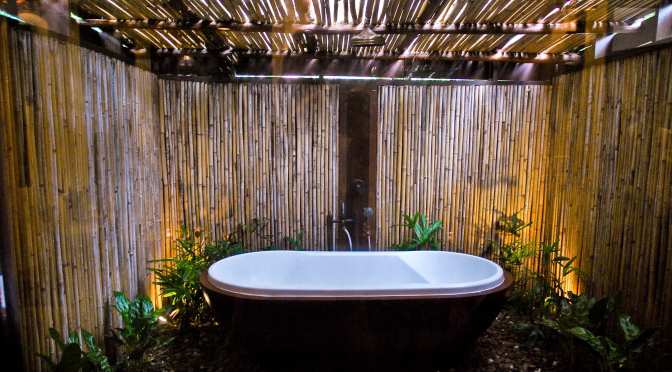
Like a Thai version of Alice’s secret wonderland garden, this harmonious sanctuary is lavishly set amidst 3,100 square metres of lush tropical greenery, masterfully planned by the award-winning landscaping master Bill Bensley. A deep, outdoor terrazzo bath designed for two and a dual alfresco rain shower are some of the suite highlights.
What sweetens the kitty:
The trained therapists infuse natural elements of Southeast Asia into the treatments here, which tactfully integrate traditional essences such as sandalwood, ylang ylang, patchouli, mandarin, lavender, lemongrass, ginger, cinnamon, bergamot and natural ingredients like yogurt and coffee beans. The signature treatment is the 3-hour ‘Culture of Anantara’ which starts off with a four-hand massage (by two therapists, duh!) and then moves onto a scrub and a steam bath.

The Spa at Rayavadee Resort, Krabi

Frequented by A-listers such as Gwyneth Paltrow, Kate Moss and Colin Farrell, this is the kind of place that should be on your do-before-you-die inventory. Set at the foot of breathtaking limestone cliffs and situated amongst 20 acres of mature untouched coconut plantations, the resort is a treat for the senses before one even gets to the spa. However, the spa is an attraction in itself, with their extensive range of therapies drawing on ancient Thai healing traditions and a philosophy of well-being that aims to ease the body, mind and spirit.
In a Nut Shell:
With dramatic limestone cliffs towering over the resort and the spa, Rayavadee is a spiritual place for the mind and soul. Adjacent to three beaches, the resort is a real retreat and that is what makes the spa so good as well. Personalised treatments can be arranged in-room, and there are even eight luxurious Spa Pavilions (decked out with exotic gardens and outdoor Jacuzzis), plus Hydro-Pool Pavilions as well.
What sweetens the kitty:
The Rayavadee Spa offers revitalising facials and scrubs, energising body wraps, soothing massages, salon treatments and spa packages that can be individually-customised as well. Recommended are the deep tissue Revitalizing Massage, the Aromatherapy treatments and the unique night time candlelit massage.

Coqoon Spa, Indigo Pearl, Phuket

With intentionally oxidised furnishings and features running throughout, this Bill Bensley-landscaped resort is guided by design and it would only make sense that their spa would follow suit. While there were already a whole bunch of quality treatments on offer, the design stakes of the spa increased two-fold this year, with the opening of the stunning Nest treatment suites which are, in essence, oversized nests suspended midair and accessed only by a bridge. Now branded as the Coqoon Spa, the spa is one of the more distinctive in Thailand and the soon-to-be opened spa suites will further secure this standing.
In a Nut Shell:
The surroundings for the treatments on offer here include eight double rooms, six immaculately presented deluxe treatment rooms, plus a luxurious spa suite (complete with a private swimming pool, steam showers, a sauna, a Jacuzzi and a waterproof shower treatment table). There is also a beauty salon on hand for the more vainly inclined.
What sweetens the kitty:
Drawing on timeless Asian herbal remedies, Coqoon Spa uses a perfect blend of specially selected ingredients and essential oils. Using Anne Sémonin branded products, the treatments and ingredients encourage harmony for all kinds of skin types.
Originally published in Kiosk Magazine, January 2012

Technological Revolution – Hotel Technology

A silent revolution has been taking place in the hotel industry over the last few years. Seasoned travellers are finally starting to tire of the repetitive in-room control panel setup and leading hotel groups are now trying to out-do each other with more expedient, integrated and interconnected gadgetry available than ever before. Executive PA Magazine picks our favourite high tech hotels in Asia by Billy Clarke.

Sofitel So Bangkok

Apple have been leading technology stocks for quite some time now and an article about hotel technology would not be complete without some reference to them. Hotels have taken Apple to heart just as well as the stock market has, but none so much as Sofitel So Bangkok which, when it opens in early 2012, will be Asia’s first hotel to offer complete Apple-based digital solutions. In other words all of the hotel’s 238 rooms will come with an Apple Mac mini computer (suites with an iPad as well), together with high-definition LCD television, wireless keyboard, trackpad, free high-speed Internet access, and a full range of office software. As well as functioning as a multimedia centre, guests can also plug their USB drives into the system, and the hotel directory, in-room service menu and panoramic webcam views will be available as well.

Aloft Bangkok – Sukhumvit 11

Scheduled to open in October this year, Aloft is the latest brand from Starwood Hotels & Resorts and it will be the brand’s first entry inSoutheast Asia. Aloft hotels are forward-thinking destination hotels, and this trendy upcomingBangkokproperty is sure to make the heart ofThailandbeat a little bit faster. Located in the center of Bangkok’s entertainment district the hotel comes with easy access to the main business district, and the loft-inspired rooms feature modern conveniences like iPod docks, free WiFi, mood-lighting controls, and plug n’ play connectivity stations for charging electronics.

Ritz Carlton Hong  Kong

The world’s highest hotel would not be complete without some first-rate technology and, not surprisingly, the new Ritz Carlton Hong Kong does not disappoint in this area. Slick, sleek and stylish from the get-go, this cutting-edge hotel is rife with novelties. It is a place where elevators zoom guests up at ear-popping speeds of 9-metres per second (compared to your average 2) and where public toilets flush with a satisfying beep – all this at skyscraping heights of 490-meters. Some other original touches around the property include the glass-enclosed infinity pool complete with a ceiling made up of 144 LED screens, a Technogym-equipped fitness centre with machines wired to the internet, plus B&O BeoSound 8 speakers in all the suites. iPads are also available to Club Lounge and meeting room guests, and all of the 312 guestrooms come with Blu-ray DVD players, iPod docks, Nespresso machines plus flat-screen LCD televisions (42-inch in the bedrooms and 17-inch in the bathrooms).

The Peninsula Toyko

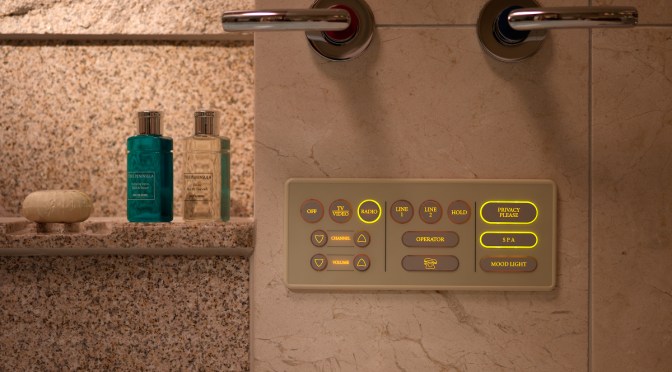
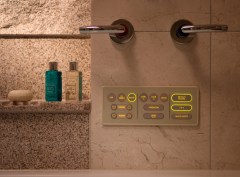
With its own R&D team and a designated electronics service department, The Peninsula Hotels Group knows more than their fair share about hotel technology. In fact the group even claims to have pioneered in-room satellite TV and a nifty indolent in-built bathtub ‘telephone’ (a keypad accessible from the bathtub with a microphone embedded in the bathroom ceiling that silences music when calls are taken) at their long-standing Hong Kong property. ThePeninsulainTokyotakes things to another level however, with the forward-looking property having embraced new technologies quicker than nerds at a tech conference. What this equates to is 314 liberally-appointed rooms which boast features such as wireless phones with Skype that can be used hotel-wide; three-in-one fax/copy/print machines that can print photos for free; an in-room nail-dryer; a wireless bedside electronic panel; dimmable Lutron lights that considerately fade into darkness at night; plus 3000-station internet radio and plasma screen televisions. The toiletry technology includes electronic Toto toilets, a digital clock set into the mirror, and a one-touch spa button which dims the lights, switches on soothing music and activates the do-not-disturb indicator. The hotel also uses iPads at the concierge desk and they even have an ‘iPeninsula’ app on which room, spa and restaurant reservations can be made.
W Seoul-Walkerhill

Like Japan, Korea is home to some of the most technology-savvy people on the planet and, when W Hotels decided to venture into the market back in 2004 (the brand’s first Asian foray – and the second international W destination) they took this to heart and created a hotel that is still advanced today. Top features include new-fashioned rooms with 50-inch plasma screens onto which guest’s own self-created art and images can be projected; hotel-wide Bose CD players; a suite with a flowing waterfall and a dining room with illuminated colour-changing flooring; plus an interactive media centre complete with videos games, pre-programmed music and movies in all rooms. However, despite the finely outfitted and fiercely stylish rooms, the chicly-designed public areas are where the hotel shines most. There are LED lights embedded in the lobby floor, digital graphics projected onto walls around the bar, and interactive artwork including a shape-shifting wooden sculpture that detects and reflects external movement and one that creates visual depictions of the subjects in front of them.

The Mandarin Oriental, Macau

At just over a year old, this beauty of a property remains to be one of the more unique hotels in Macau largely because, as the only non-gaming, five-star hotel on the Macau Peninsula, the Mandarin Oriental Macau places its focus on areas other than gambling. Thus, guests here are presented with a top spa, exclusive meeting and conference facilities, plus some fine dining options and 213 super-equipped guestrooms as well. Guestroom technological comforts include over 100 on-demand HD movies, over 200 available internet radio channels, 10,000 available songs, internet on the television, an iPod dock, plus hydro massage-equipped showers, television-side bathtubs, and Nespresso coffee machines. The on-property gym is also the first to have a Technogym Wellness System in Macau, which provides guests with the Technogym Key System that can record and monitor their workout sessions each visit.

Originally published in Executive PA Magazine, Asia

PDF


China Movie Magic

So by now the majority of you have had your brain cells burnt out by the mindfuck of a film that was Inception, and most of us should have at least some basic infantile grasp of what the movie was about (dreams and spinning tops, or something like that). The film is now currently doing the rounds in Chinaand, as one of the only 20 foreign films to be shown in the motherland each year, this is a big deal. Furthermore, the film was released three weeks ahead of schedule since it apparently passed through censorship without any cuts. Christopher Nolan was probably buying drinks all round (or should’ve been), as the film soon went on to be the fourth-biggest opening ever for an American movie in China, behind Avatar and the two recent Transformers movies.

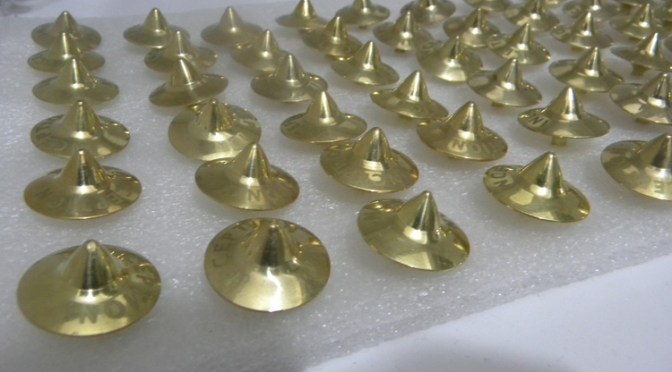
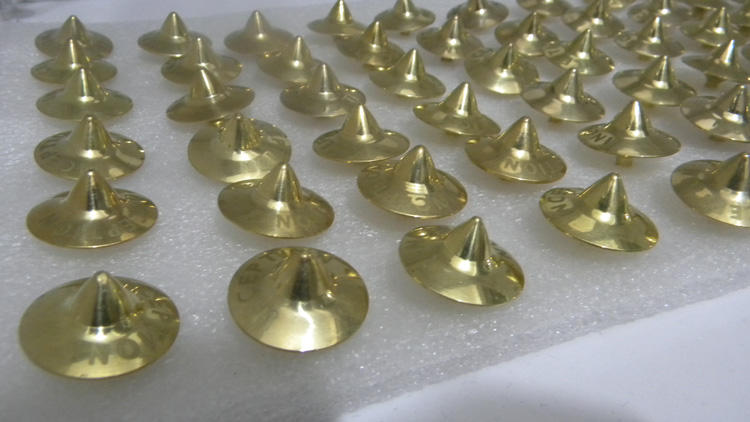
Nevertheless, like most movies shown in our proud motherland, Chinese audiences have taken to the film in quite profound ways. In Chinese the name of the film loosely translates to ‘a space for stealing dreams,’ which is a lot more helpful than the English title. But, obliging title or not, this didn’t stop some locals seeing the film over 4 times. The hype was so big that shops even started selling replicas of the signature spinning tops used in the film, and they sold fast, considering they were priced at for $130RMB each. An online buyer claimed he needed the spinning top to distinguish dreams from reality. In another province a special competition was held to find who could design the best 7 layers of a dream, and over inChongqing a man even tried to hire a psychologist to perform inception on his own wife ahead of their wedding.
This is not the first time a foreign film has generated weird reactions in China. Last year a young transformer fan was found to have been drinking gasoline for 5 years, after being inspired by Optimus Prime and his robotic crew. Also there was that other stupidly popular 3D movie about oversized smurfs which sent China into a frenzy when it was first released, with losers camping out and cueing for Avatar tickets from as early as 4am. The fiendish demand for Avatar led China to become the most expensive place in the world to watch the film, with tickets fetching up to $200RMB a pop. Lifeless locals saw it as a kind of status symbol, and our humble counterfeit nation even started printing fake cinema tickets. And let’s not even begin to mention the overly-detailed criticism or the popular tourist spot that was controversially renamed after a place in the film.

Originally published in the now defunct The Dark Side Hong Kong, 2010

Attack of the Killer Trees

While the EU is currently under apparent threat from terrorism and Americais still suffering from economy woes, here in Hong Kongwe are facing a new kind of threat…from big green serial-killing trees. Well, OK, not exactly serial killing but definitely serial-injuring because there have been an uncanny amount of injuries caused by trees over the last few years. In fact, according to a survey released last Friday one in 10 Hong Kong trees is in danger of collapsing – and you’re more likely to be targeted by evil vegetation if you’re a tree-hugging hippy living in an wooded area (or a distracted iPhone addict watching porn whilst walking in the forest).

Based on the findings of the survey the Chinese University of Hong Kong are now calling on authorities to establish a tree-health database – you know, a catalogued database like IMDB, but to determine the floppiness of trees instead of films. But, while we don’t yet have something as advanced or supposedly necessary as a tree-health database set up, a team of 200 volunteers was nevertheless established last month. However, we still won’t be able to sleep safely at night, because these volunteers all happen to be Members of the Democratic Alliance for the Betterment and Progress of Hong Kong. What, didn’t you know democrats are the best tree experts around? Nope, nether did we.

The reason for all this tree hullabaloo? Well, it all stems from the Hong Kong Government’s fetish for concrete and development (and their ignorance of the natural world). Back in 2005 the incidents started with the luckiest tree in Hong Kong (the Lam Tsuen Wishing Tree, which is so popular that it has its own expressway exit and is shown on highway signs), which had an entire limb fall off, breaking the leg of a 62-year-old man and scratching the head of a 4-year-old boy. The other big indecent that reignited the paranoia in 2008 was the collapse of a 23-meter tree in Stanley, which killed a super-unfortunate 19-year-old (and caused the loss of thousands of dollars for businesses in the area, an insensible bastard of a shopowner said at the time). More recently, back in June of this year a falling tree hit a taxi driver and a pedestrian in central, and 2 weeks before that another evil tree took the life of a 49 year-old cyclist, who swerved to avoid a falling branch and ended up dieing in hospital where he died from brain injuries.
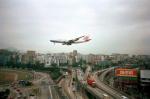
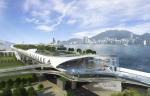
At the end of the day all this tree anarchy has only resulted in a more paranoid public and a government who now has another excuse to pave over more long-standing parts of Hong Kong and a better reason to remove dangerous municipal ‘hazards’ like greenery and heritage. What’s more is that a similar thing has already happened before, when the ‘more regulation is better regulation’ mentality led the Hong Kong Government to bury all our hillsides under concrete after a few mudslides resulted in fatalities back in the 90’s. So be on the lookout for more concrete and fake plastic trees – coming to a leafy area near you soon.

Originally published in the now defunct The Dark Side Hong Kong, 2010

Bums on office seats are not always good for bottom line

Employees can probably feel less guilty about tardiness or web-surfing during office hours. At least that’s the implication of the results from a Regus global survey suggesting that flexible working conditions can help increase worker productivity and, by extension, company profit.

The survey, which covered more than 16,000 senior business managers, is one of the largest of its kind to validate the correlation between flexibility, productivity and profitability.

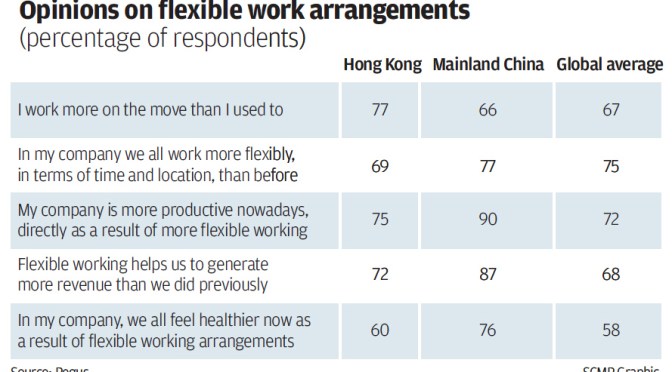
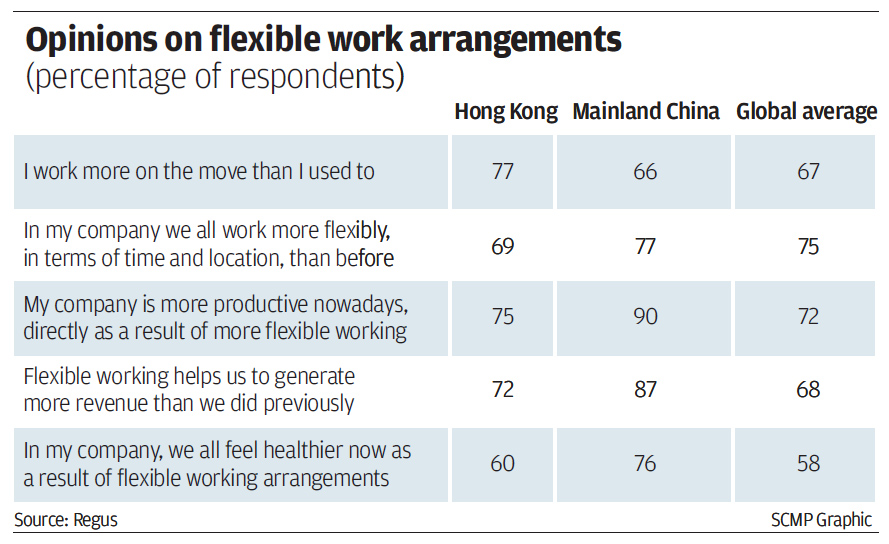
Among those polled in Hong Kong, 75 per cent said that flexibility boosted productivity, while 72 per cent agreed that it could help increase revenue.

Hans Leijten, Regus vice-president for East Asia, attributes the gains to enhanced employee morale.

“Flexible work gives people power to decide when and where they work. This helps them to plan and execute their work more efficiently and to reduce the time it takes to commute and to actually do the work,” he says.

“A more efficient and happier worker will generally deliver better results.”

At 67 per cent, a significant portion of Hong Kong respondents also reported feeling more energised and motivated, thanks to flexible work arrangements. Some 60 per cent even claimed to feel healthier, implying cost-savings on healthcare premiums.

Leijten notes that flexible arrangements can also help cut office rentals. “As a rule of thumb, 40-60 per cent of any office space is underutilised,” he says. “In a city like Hong Kong, where commercial space is among the most expensive anywhere, there are big savings to be made.”

And with many firms still reluctant to commit to large pay rise this year, flexible arrangements can be used as an employee retention tool, Leijten adds. “Staff who work flexibly report feeling healthier, more energised and more motivated, which is good for staff retention and morale,” he says.

This view is echoed by Martin Cerullo, the global director of resourcing communications at Alexander Mann Solutions. “The ability to work flexibly makes up an important part of the overall employee value proposition. Employers who allow staff to work flexibly are really saying, ‘I trust you to make the decisions about the time and working location that are right for you.’ Naturally, this sends an appreciative message,” he says.

Leijten notes that the Regus survey findings help reaffirm a common practice in Hong Kong, particularly among smaller nimbler companies where implementation is easier.

“Flexi-working is the future of work,” says Leijten. “If you manage your employees by line of sight, all you can evaluate is bums on office seats. The best companies manage people by results, and flexible working clearly helps employees improve their results.”

Originally published in South China Morning Post, March 2011 

Architecture Supplement – Building Blocks of the Future

Hong Kong has always been an architectural hub, with some of the best talent in Asia and the world, and, today, its architecture industry is alive and vigorously kicking.

“With its mixed international pool of architects and proficiency gathered over time, the Hong Kong architecture industry is perfectly set up as a hub to serve the region,” says Dominic Lam, president of the Hong Kong Institute of Architects (HKIA).

“In fact, more than 50 per cent of Hong Kong architects end up working on projects outside Hong Kong,” he adds.

The CEO of architecture global giant Aedas, David Roberts, shares the same sentiment, describing Hong Kong as a “strategically-placed business destination”.

“The proximity to Southeast Asia is important,” he says. “A lot of clients [from there] look to Hong Kong professionals to provide provisional services for their projects. Hong Kong has a huge advantage in terms of its geographical location.”

However, this regional market is dwarfed by business in China, which has surged two-fold in the past few years. “The workload from mainland China has been increasing, and 60 per cent of the work in our Hong Kong office is from the mainland,” says Roberts.

“Ten years ago, this would have been only about 10 per cent and, looking ahead, the 60 per cent might become 70 per cent soon,” he adds.

This is felt throughout other practices in Hong Kong, too. Kenneth Lui, a director with the P&T Group, even points out that increasing mainland work is putting pressure on local and international architects to learn Putonghua.

“One of the most important things for an architect in Hong Kong now is language – even locals need to learn Putonghua,” he says. “One must also be willing to travel and to work on the mainland.”

Lucy Richardson, managing director of Bespoke Hong Kong, is seeing the same trends at her local architect and designer recruitment firm. “At the moment, 80 to 90 per cent of candidates we place are Chinese, and this is mainly because of the language factor,” she says. “We are finding it more and more difficult to place international architects because they don’t have the language skills.”

Candidates need to know more than just Putonghua though, as Richardson points out. “Those who are most in demand are the locals who have trained overseas, who have had experiences with international practices and are returning home to the mainland or Hong Kong,” says Richardson.

“Although graduates are of interest, the Chinese market is looking for broad-minded architects who have done two to 10 years in a practice overseas, and have come back with understanding, training and experience.”

Richardson also points out that while there are some strong candidates coming out of local schools, Hong Kong-educated students are slightly weaker than their international counterparts.

“I think that the brief set in universities here is a bit basic, and does not really get people thinking – it is a lot more challenging at Australian, British and American universities,” Richardson says.

P&T Group principal designer Remo Riva agrees, adding that creativity is somewhat disregarded in Hong Kong.

“At universities here, they teach that management skills are very important and creativity is more a by-product because it is not so needed or expected,” Riva says. “Even at the University of Hong Kong, the emphasis is not so much on teaching or on creativity, but about training for management skills.”

Creativity is also lacking in the field, where developers dominate and tough regulations restrict architects. “Basically, to be approved, the architecture has to work around and within the regulations and demands of developers, which reduces creativity. In other places, you look at buildings and you can see the developers are more open,” says Lui, of P&T Group.

He adds that developers are also snapping up talent, which means that local demand for architects remains strong.

Nevertheless, HKIA’s Lam says that the architectural scene is healthier than it has ever been, and fresh graduates can expect to start at a competitive monthly rate of HK$30,000 minimum, which is the highest that entry-level salaries have been in the sector.

Roberts of Aedas has the same positive viewpoint. “Hong Kong has been able to grow domestic talent through the universities and educational establishments here, while also attracting international talent, even as markets are quiet in places like New York and London,” he says.

“We have some of the best infrastructure, and investment is continuous with strong all-round optimism and energy levels. This is certainly the place to be right now,” Roberts adds.

Originally published in South China Morning Post, March 2012

PDF

Industry Insider – A matter of trust at Withers

Priding itself on its difference from other companies, Withers Hong Kong is the only law firm in the city that places equal focus on wealth and asset preservation, as it does on wealth planning. It has also made significant additions to its Putonghua-speaking team. Managing partner Marcus Dearle explains that this is essential as many mainland Chinese clients wish only to do business in Mandarin.

What is the ‘Wealth Preservation Group’ and why was it set up? 
Formed in 2011, the work of Withers Hong Kong Wealth Preservation Group has attracted considerable interest due to the wealth planning industry’s recognition that family discord and divorce is a clear and present danger to family wealth.

It is of great interest to high-net-worth individuals, and this part of the world. In some high-net-worth cases, spouses may lose up to one-half of their wealth on divorce. But, there are steps that can be taken against this.

We provide advice on pre- and post-nuptial settlements and dynastic trust planning, to help restrict attacks against assets.

We also “stress test” existing documentation to check that all is in order – for example, examining if a will is properly drawn up and attested, to avoid hugely expensive and acrimonious scenarios.

How do the mainland Chinese regard wealth preservation? 
An increasing proportion of high-net-worth individuals come from mainland China. As with wealthy Hong Kong Chinese clients and expatriates, some have become concerned about the big cases that have recently hit the headlines.

Is Withers trying to expand the idea of wealth preservation into China?
We are trying to push wealth preservation in China, using our intermediary contacts and referrals from private banks.

How important is the mainland China market to Withers?
We have been attracting more mainland clients in recent years, which  is the same as other Hong Kong firms. Hong Kong is often the first jurisdiction that mainlanders look to; Singapore is another.

We will be increasing our footprint in Asia when we open our new Singapore office this year.

How many Putonghua-speaking staff do you have, and do you plan to increase this number?
We are certainly looking to hire more mainland Chinese lawyers in the future. Currently, we have six fluent Putonghua speakers in our team.
One of our recent successful mainland recruitment stories is Lian Fang, a registered foreign lawyer brought up on the mainland, who attended Nanjing University and Columbia University School of Law.

Any international law firm that doesn’t appreciate the importance of mainland China risks losing valuable business now and in the future.

Is there a different way of dealing with mainland clients?
I think Hong Kong Chinese clients, like expatriates, usually have a basic understanding, for example, of the concept of what a trust is.
Mainland clients have often become very successful over a short period of time and won’t have come across the concept of a trust – the idea of putting your money in the hands of other people.

This is very unfamiliar territory to them, so this is all the more reason why we need to have people in the office who are able to win their confidence, and explain the intricacies of the law to them.

A lot of mainland clients only want to deal with Putonghua-speaking lawyers.

What is the hiring outlook for Withers in 2012?
We are currently expanding our litigation and wealth planning arm, and are recruiting for our new Singapore office, with a major focus on personal tax and trust lawyers. There is a big demand for wealth planning from clients in this region.

A mainland China office is definitely a future target as well and our first mainland-bred lawyer, Lian Fang, will hopefully be the first of many.

Originally published in South China Morning Post, February 2012


Welcome to the web portfolio of the Hong Kong writer, photographer, editor and dreamer-creator, Billy Clarke.