All posts by hkbilly

A maverivck freelance writer.

Workers stay bullish on economy and job hopes

The new Michael Page Employee Intentions Report reveals that most workers have faith in the strength of the Hong Kong economy. Completed in June, the online survey polled entry-level to senior-management professionals on salary expectations, confidence in the job market and general employment outlook.

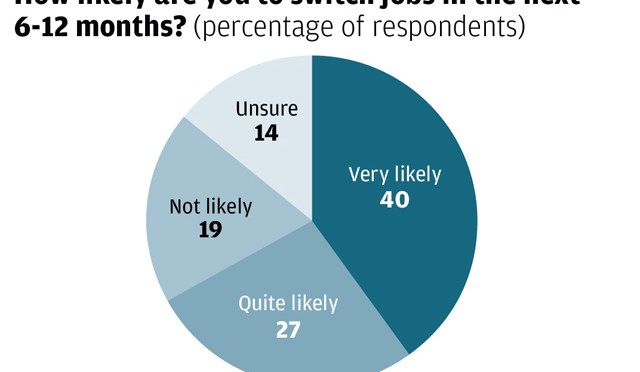
Of the 700 respondents, 42 per cent rated the current job market as strong. Some 40 per cent also indicated they are likely to change jobs within the next six to 12 months, with over a third of those who wished to move citing career progression as their primary reason. Half of those surveyed also said they would ask their current employer for a pay rise.

In light of these results, employers will likely need to look at ways to hold on to staff over the next year, says Anthony Thompson, senior managing director for Hong Kong and Southern China at Michael Page.

“Employers need to focus on retention and will be expected to enter into salary negotiations to keep top talent – that is, individuals with the experience and knowledge to drive the business forward,” he says, adding that jobseekers are paying special attention to career development plans, something hirers should be wary of.

Employers should also be mindful of the fact that average salary rises look set to grow. Over a third of respondents are aiming for a rise of 6-9 per cent, far outpacing expectations from the same time last year.

However, Thompson adds that while remuneration is important, there are a number of other ways employers can encourage top talent to stay with them.

“We increasingly find that candidates are focused on their career path and not just what is in it for them now,” he says, pointing to the impact of career progression on willingness to stay put.

Part of what’s fuelling the higher expectations, he suggests, may be the current wealth of job opportunities. Much of this, Thompson says, is attributable to the strength of the mainland economy, which is prompting many firms based there to expand their operations in Hong Kong.

“There is no doubt that China’s economic strength and continued growth are a real positive for the employment market in Hong Kong. Asia overall is performing well compared with most other markets,” Thompson says.

The only exception may be the financial services sector, which continues to be hit by uncertainty, especially in Europe.

Originally published in South China Morning Post, September 2012 

Luxury on High – St. Regis Shenzhen

Experience a new level of hospitality at The St. Regis Shenzhen.

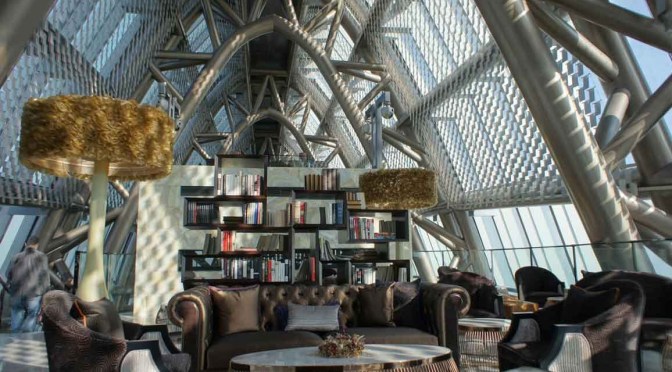
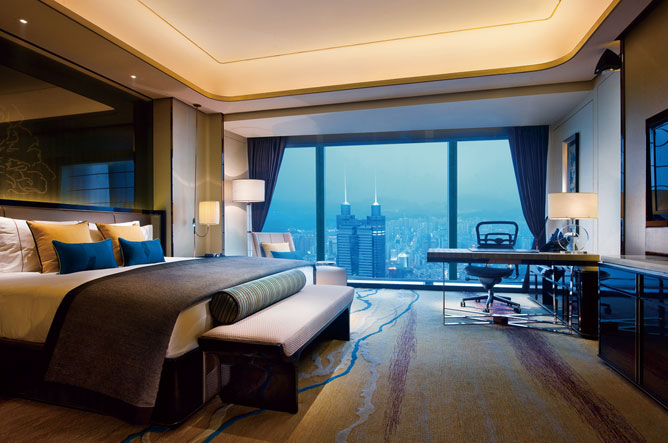
Continuing their foray into China and expanding their palatial presence further in Asia Pacific, the newest St. Regis property in Shenzhen is the latest and greatest from the luxury-centric group and it is a milestone in every sense. The resplendent hotel is housed in the upper fractions of the city’s highest building, the 441.8 meter-tall Kingkey 100 building, which also happens to be the ninth tallest building in the world and the tallest building ever designed by a British architect, who in this case was the highly-acclaimed Sir Terry Farrell. Continue reading Luxury on High – St. Regis Shenzhen

Indian Chic – Lodha Fiorenza, at Goregaon in Mumbai

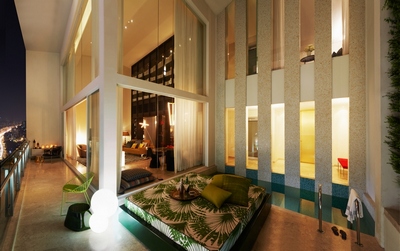
The ultra-hip global design firm, yoo, just recently launched their latest and one of their most audacious projects yet, Lodha Fiorenza, at Goregaon in Mumbai.

With India going from strength to strength every day and with many Indian luxury properties redefining luxury for the world, it was only a matter of time before yoo appeared in India. Founded by the world’s most celebrated designer, Philippe Starck, and one of the most influential property developers in Europe, international property entrepreneur John Hitchcox, the celebrity-aligned design company has names such as Kelly Hoppen, Marcel Wanders and Jade Jagger working for them.

This slideshow requires JavaScript.

With experience spanning 33 different projects and 27 countries, yoo exists to help developer clients compete successfully in the property marketplace, by providing the very best in design, branding and marketing. Their latest foray in India is, fittingly, in Mumbai and it is also fittingly designed by Jade Jagger, the 39-year-old daughter of Rolling Stones lead singer Mick Jagger.

Jagger has already designed homes in Morocco, properties in Turkey and apartments in New York, and her work is always respectful of the culture within which the project is located. This is undoubtedly the case with Lodha Fiorenza, which blends India’s rich and varied tradition with unique cultural elements from across the world and Jagger’s trademark style of relaxed luxury.

“I am absolutely delighted to be partnering with Lodha to design Lodha Fiorenza. I have always been inspired by the vivid colours and exotic textures of India; it’s been a wonderful experience to incorporate them in the design of Lodha Fiorenza – a perfect balance between luxury and comfort,” commented Jagger at the launch.

When completed in 2014 the primely-located position project will boast 452 apartments, across four buildings. Milano, the tallest of the four structures, is a 52-storey tower which will rise to a breathtaking height of 600 feet. The building will feature luxurious four bedroom residences and lavish duplex sky villas of just one per floor. Residents will get to enjoy such lavish facilities as a rooftop lounge, an observatory with stunning views of the Aarey colony and the Arabian Sea plus an infinity edge cantilevered swimming pool. The other three towers, Venizia, Sienna and Roma, offer stylish two, three, and four bedroom residences in the Jade Jagger for yoo style. All the homes will be fitted with the highest specifications and include lighting and sounds controls by iPad, German Poggenpohl kitchens, and Italian marble flooring.

Area Guide – Beijing

China World Summit Wing / Regus Business Centre –

It has been said that a new skyscraper is built every five days in China. Beijing, as one of the most populous cities in China, definitely has its fair share of super-tall structures.

Many of these buildings are located in well-planned business complexes that are more like mini cities, with offices, accommodation, restaurants and shops for the many travellers and workers that the developments are aimed at.

A perfect case in point is the China World Summit Wing hotel, one of the capital’s newest luxury accommodation establishments. Managed by Shangri-La and situated in the heart of one of the city’s premier business districts, the property is unmatched in convenience, with plenty of transport links in the immediate vicinity and the Capital International Airport just 45 minutes away by car. Companies in the area span a broad variety of sectors including finance, insurance, trade, telecoms and IT.

The hotel itself is housed in the upper section of the 330-metre-tall China World Trade Centre Tower, which is the tallest building in Beijing and the 33rd tallest in the world. Inside you’ll find a whole host of facilities, many of which are geared towards corporate events. The more notable facilities on offer include one of city’s largest pillar-less ballrooms, a 95-seat auditorium, a rooftop garden and a number of exquisite dining venues, all offering spectacular city views.

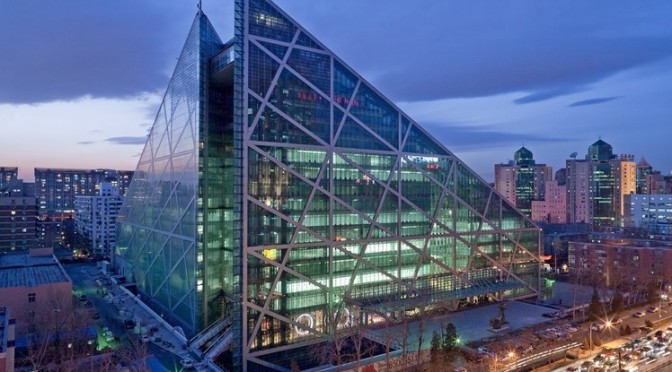
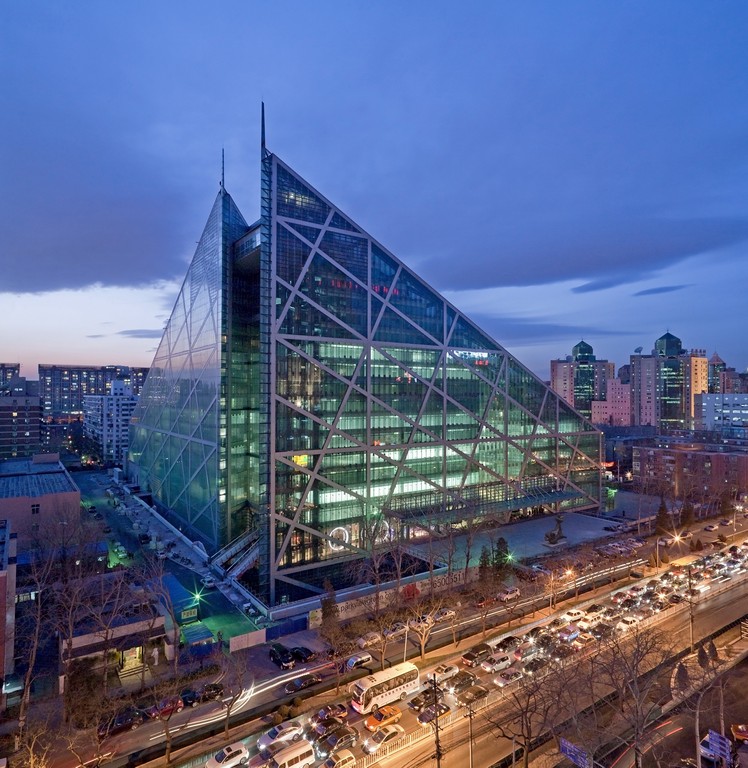
Another prominent new opening in the city is the latest Regus Business Centre on the top floors of Parkview Green, a unique pyramid-like structure as accommodating as it is easy to spot.

The suites and offices in the business centre offer all the amenities expected from a modern office. Receptionist and secretarial services are also available, as are a number of plush meeting rooms. Both long- and short-term leasing arrangements are available.

Originally published in South China Morning Post, August 2012

Apple Affairs in China

apple chinaChina has just announced a 10% cut on the electronics goods import tax which is a U-turn on the events of last year that left Hong Kong Apple fanboys crying in the corner.

Have you tried to buy an iPad 3G or an iPhone 4 recently? Unless you ordered online (where one requires a credit card, a local address and is limited to 2 per person) your buying efforts were probably fruitless because it seems our neighbors across the border have been clearing the stock out of our poor little retail outlets (evidence: ask any local electronics store salesperson, or watch this video of two young ladies stuffing an entire box of iPhones into their bags on the KCR). Why the fascination with these specific Hong Kong goods? Well, apart from them being better and wholly superior, it’s because the iPad 3G is banned in China, because Apple wares are sold tax-free in Hong Kong (a saving of RMB $724 on the iPhone 4) and because Apple can’t make the iPhone 4 quick enough to deal with the feverish demand of those mainlanders.

Things eased up temporarily back in October last year when Chinese customs started strictly imposing a 20% import tax duty on iPhones and iPads (in addition to the 20-category list featuring other common money-makers such as alcohol and tobacco). Although the regulations were issued years ago, they were not exactly enforced until October (which was coincidentally around the same time that the Apple fever reached a frenzy in China when the official mobile carrier sold 100,000 iPhone 4’s four days after its launch and when one official Beijing Apple store had to be temporarily closed down to change a policy to deal with iPhone 4 resellers there and then. A bit of background – reselling fresh Apple goods on the gray market is a super-easy way to make a quick buck in China (read a comprehensive guide on the local iPhone 4 market here) and the illegal peddling has reached such an extent that a group of 14 housewives were even caught smuggling 85 iPads and 340 mobile phones into Shenzhen (one of them had 65 phones attached to her waist, and approximately another 20 in her handbag – that’s a lot of Apples).

But the latest news really takes the apple biscuit, because last week – less than 3 months since the tax had begun to be more strictly enforced – authorities had a change of heart. In a typical one-step-forward/two-step-backwards approach, China’s Ministry of Finance reversed their 20% tax law and officially declared a 10% reduction of import tariffs on computers, digital cameras, and other electronic equipment which has been in effect since January 27 (one wonders if the recent meeting between Obama and Hu Jintao has anything to do with this). In addition, Apple also just opened their latest store in Beijing a few days ago which, as usual, drew in a crowd of eager fanatics.

Frankly, we can’t understand what all the iFrenzy is about – here at the TDS underground headquarters we have a few crummy iPhones which are pretty pathetic, and besides, the majority of positive press reports about Apple and their far-from-perfect iThingies are influenced by newspapers and TV networks that simply want to profit from the hype – or even worse, reporters who are looking to sell books about the iPhone.

 Originally published in the now defunct The Dark Side Hong Kong, 2010

Sex and Zen 3D Breaks Ground

Sex_and_ZenNot content with being the cinematic event of our decade, the upcoming porno flick Sex and Zen 3D: Extreme Ecstasy is also breaking ground as one of the most innovative adult films ever to be released as well, with a new distribution tactic that has never been seen before.

When the film is released next year the producers will be offering different cuts to cater to the censorship standards and cultural tastes in different regions, and they will be encouraging buyers to “pick and choose” edits, not only for their regions, but also for theatrical and DVD releases, to address the censorship concerns of various territories. In other words the interested buyers will be able to customize and modify the film to suit their own needs.

So far this unconventional approach seems to be working, as the rights to the title have already been snatched up for Italy, France, Peru, Russia, and Singapore during the American Film Market, after an eight-minute preview in 3D was screened. Rights were also pre-sold for New Zealand, Australia and Korea in Cannes.

In case you’re unfamiliar with the film (yeah, right) the HK$20 million porno work of art claims to be one of the first adult films to be shot entirely in stereoscopic 3D (not technically correct). The film is loosely based on the erotic novel The Carnal Prayer Mat and is a follow up to Stephen Shiu’s 1991 blockbuster Sex and Zen (which had sex scenes shot using the same techniques and style as seen in popular ‘wire fu’ action films) and which took in HK$20 million at the box office and held the record as the top grossing Category III film for 17 years. Sex and Zen 3D: Extreme Ecstasy stars Japanase AV beauties Saori Hara and Reiko Suho, plus Leni Lan, Yukiko Suô, Hiro Hayama, Vonnie Lui, Tony Ho, and Irene Chen. The digital effects house behind the film are also the same dudes responsible for the 3D conversion of Tim Burton’s A Nightmare Before Christmas, so you know this is not going to be tacky 3D either.

The film’s producers say the film is already generating a buzz in mainland China, where sex scenes and nudity are systematically censored. Six travel agencies have even sought to advance bookings for Chinese tourists to see the movie.

Imdb synopisis here:

http://www.imdb.com/title/tt1365048/

Clip from the set:

Trailer here:

Originally published in the now defunct The Dark Side Hong Kong, 2010

Case of the Clay iPhone

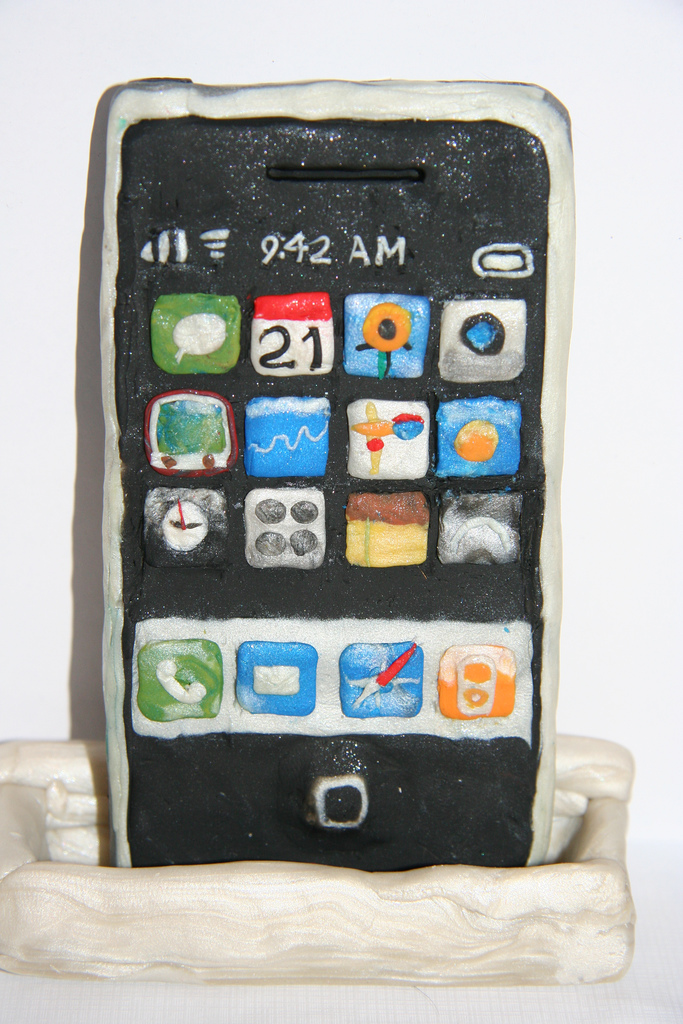
clay iphoneThe Hong Kong iPhone madness continues this week with a bizarre story involving clay iPhones. No, these were not some limited edition clay iPhones (like these) and they were not clay iPhone cases as well – they were in fact just clay replicas deceivingly stored in genuine iPhone boxes. The main culprit involved denies this of course and instead claims that the clay was just used as the inside filling for some iPhone boxes that he was selling to an iPhone trader (lucratively priced at $400 a piece, when he himself had bought them for $200 per box). On a separate occasion he also had an accomplice put cling wrap cornflour parcels inside some boxes. During the first day of the hearing yesterday the supervising deputy magistrate refused to take the clay iPhones out of the plastic evidence bags because worms had hatched inside some of the iPhone boxes (worms inside the apple, get it?!). The clay case (note the pun) continues today with the culprit on trial for selling 10 clay iPhones in unopened boxes for HK$57,000 and two clay iPhones (for HK$9,200) which were sold by another 60 year-old accomplice. Hmm, maybe we’re in the wrong industry here.

Originally published in the now defunct The Dark Side Hong Kong, 2010

Thailand’s Grape Adventure – The Thais That Vined

Situated a leisurely drive away from Bangkok are a handful of unique home-grown Thai wineries which have slowly been gaining praise with wine-drinkers around the globe and, despite the government’s strict stance on alcohol, things are looking better than ever for the budding local wine scene. 
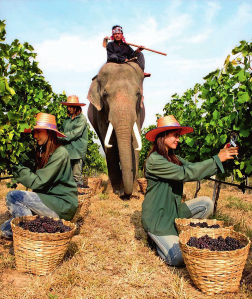
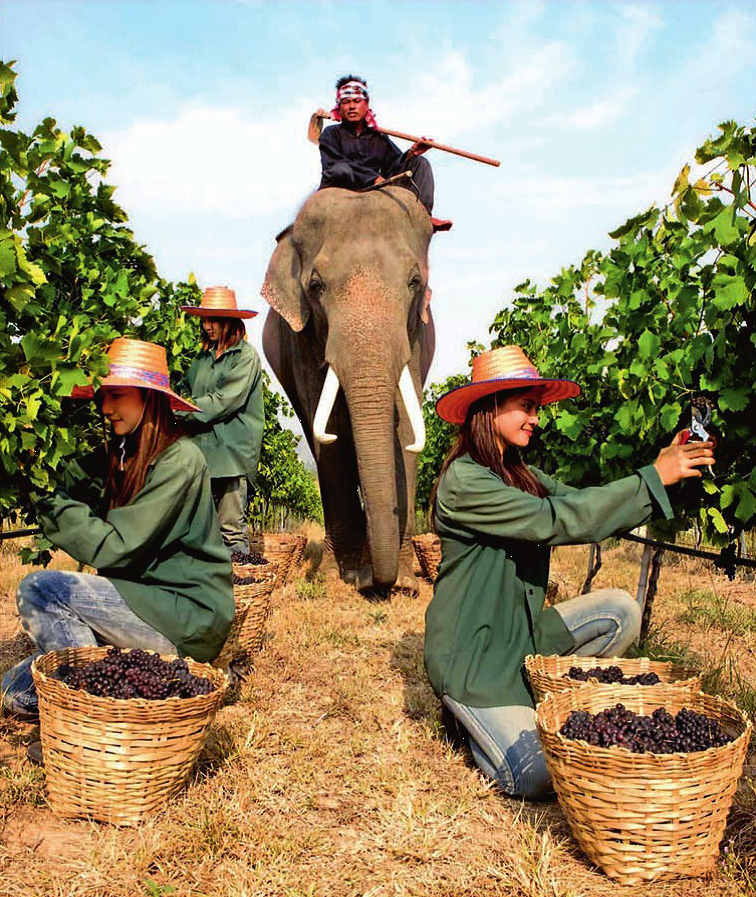
It’s a late Sunday afternoon and a gingery orange hue slowly turns to a bloody red in the sky above miles of lush budding grape fields. Below, some fortunate individuals sit around a table covered in wine bottles, contentedly sampling a batch of matured grapes fresh from the latest harvest. If trite clichés had their way, this romantic scene would most likely be set in Bordeaux or Tuscany, but this is far from the case, as just beyond the table of wine-drinkers a full-grown elephant assisting with the grape-picking breaks the stereotype – and further on just over a hundred kilometers away from the wine fields is Bangkok, where the rush hour traffic scarcely percolates through busy streets whilst the wine bars and lounges begin to fill up as twilight sets in.

Wines are fairly new to the Bangkok drinking scene, but local taste buds have been maturing more rapidly in recent years as the city, and the country, quickly develops. Wine drinking is now de rigeur in Thai society and, in line with Asia’s burgeoning levels of wine consumption, just about every bar and hotel worth visiting in Bangkok now boasts an erudite selection of wine. This is the same story in other popular spots around the country as well. Official figures indicate current Thai wine consumption to be at 12-14 million liters per annum, and it has been growing at a steady rate of about 6.5% per year since the millennium.

There is a silent revolution taking place in the small but cozy local wine production scene as well, with many of the existing Thai wineries having garnered the respect of the international wine scene by securing numerous esteemed awards. Just back in June three Thai wine professionals passed the internationally-recognized Court of Master Sommeliers Certified Exam, and one of the local star wineries, GranMonte, was also recently awarded with 12 medals at prestigious competitions in France and the UK. However, wine-producing is probably the last thing one would associate Thailand with and, as the sommelier Siwat Thitipornwatthanakul from the Four Seasons Bangkok points out, “Thailand only has limited areas where grapes can be grown for wine making, and it also has geographical limitations.” Nevertheless, these geographical limitations do not run throughout the country and Thitipornwatthanakul adds, “I am confident that Thailand is the most successful wine-producing region within South East Asia.” This confidence is shared by many and some have even said Thai wineries are the best in Asia – although China is of course a close competitor. As Joe Sriwarin, the editor of Wine Today magazine (and one of the three who passed the Court of Master Sommeliers Certified Exam), explains, “In Thailand, the producers are all millionaires who are passionate about wine, and when money is no objection there is no stopping them – no other wine-producing country in Asia is as unique as Thailand.”

This uniqueness is, in part, due to the geography of the country which causes the few select wineries that operate to run in the mountains around Thailand and the valleys in the northern part of the country where the weather is cooler. Although Thailand is a tropical country, these higher altitude areas provide a predominantly subtropical climate which is almost ideal for winemaking. Prayut Piangbunta, the director and chief winemaker from Khao Yai Winery – another of the leading Thai wineries – knows this more than any and he explains that, “Thailand is the only country in the Northern Hemisphere which has the same harvesting period as the South, and this creates a perfect environment for grapes to grow, with dry cool nights and warm sunny days.” Being close to the equator, Thailand’s latitudes fall between 10 and 20 degrees (in contrast to the typical old-world wine-making standard of 30 to 50) and, as one would imagine, this is not your average wine-producing environment – this is the world of ‘New Latitude Wine.’ Contrary to viticulturalist beliefs, Thailand wineries are perfectly capable of growing many types of grapes, though the subtropical climates are more suitable for grapes with high acidity. As Jirachai Sethisakko – the Group Wine Guru for Anantara – highlights, “The quality of Thai wines is comparable to mid-range Chilean wine and an entry-level Australian Shiraz.

In the industry everyone knows that Thailand has some of the most distinctive wineries in the industry, and the ideal grape-growing conditions even allow some wineries to produce two harvests a year. In this world of ‘New Latitude Wine’ the wine production season runs from November to March and harvesting takes place from January to late March. Labor is cheap and grape-picking often takes place at night to avoid the heat of the day. However, the exceptionality of the ‘New Latitude Wine’ world is not just limited to technical details. This is also a world where there are floating vineyards that workers must harvest by boat, and a world where elephants aid the grape-pickers – this is wine-making with a difference.

These differently-made wines are produced mainly southwest of Bangkok in the Chao Phraya Delta and the Hua Hin Hills, and in the north and northeastern parts of the country near Chailang Rai and the Khao Yai region, about 130-kilometers from Bangkok. The central wine hotspot is the area around Khao Yai National Park, where a cluster of the leading local wineries operate, and where almost 50% of local Thai wines are produced. Operating within close proximity of one another, many of these wineries also offer tours, lodging, restaurants, and other activities. Up in the northeast, for example, Village Farm Winery boasts a spa and a cliff-hanging swimming pool, whilst the PB Valley Khao Yai Winery vineyard offers resort-style accommodation and Siam Winery boasts a large Thai-inspired wooden pavilion designed by a former Norman Foster architect. For this reason the area has been loosely compared to Napa Valley in California and the enthusiastic atmosphere at local wineries could be compared to other wine scenes that were also once not so developed. As Nikki Visootha Lohitnavy – the Winemaker at the GranMonte winery – states, “It is kind of comparable to the 70’s when Napa was booming. Back then Napa wines competed with the French wines and won at the judgment of Paris. Now we are more or less winning the same all around the world.” However, the Thai wine scene is not quite yet ‘winning’ at a Charlie Sheen level yet and, as Siwat Thitipornwatthanakul from the Four Seasons Bangkok clarifies, “There are definitely opportunities for Thailand’s wine industry to grow. We still need more education in wine-making. Chile is a good example for us to look at, since it is a wine region with similarities to Thailand.”

Chile is the perfect yard post to measure the Thai wine scene against, since it is a young wine country with a similar climate that produces similar wines, and that also once lacked the education to create good wine and was plagued by tax problems. However, though Chilean alcohol taxes were dropped (and the wine Chilean industry subsequently saved) in the 1980s, excessively high taxes and a strict governmental stance on alcohol are hindering the growth of the local Thai wine scene. “The Thai government is very strict with alcohol advertising. Thailand wine deserves better and more publicity from local press but they cannot publish pictures of bottles or write about wine except for education,” says Joe Sriwarin, the editor of Wine Today magazine. In spite of everything though, the local Thai wines are doing extremely well outside of Thailand and, with Thai wines being undoubtedly some of the best to come out of Asia, the future nevertheless looks bright for this new world of newer New World wines.

Originally published in Turbojet Horizon Magazine, August 2011

PDF
Coqoon Spa, Indigo Pearl, Phuket

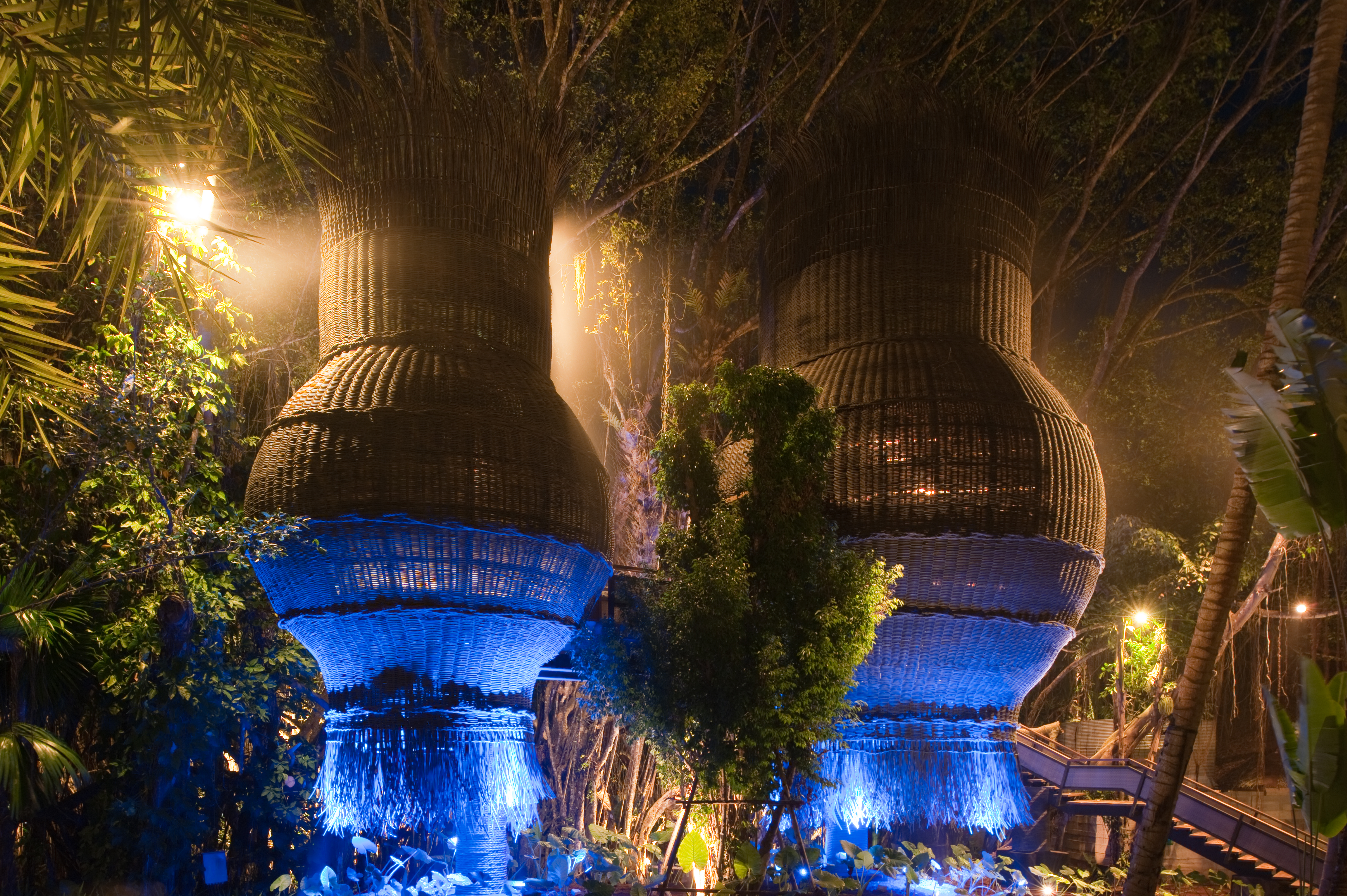
With intentionally oxidised furnishings and features running throughout, this Bill Bensley-landscaped resort is guided by design and it would only make sense that their spa would follow suit. While there were already a whole bunch of quality treatments on offer, the design stakes of the spa increased two-fold this year, with the opening of the stunning Nest treatment suites which are, in essence, oversized Avatar-like nests suspended midair accessible only by a bridge. Branded as the Coqoon Spa, it is now one of the most distinctive spas in Thailand and the spa suites further secure this standing.

The surroundings for the treatments on offer include eight double rooms, six immaculately presented deluxe treatment rooms, plus a luxurious spa suite (complete with a private swimming pool, steam showers, a sauna, a Jacuzzi and a waterproof shower treatment table). There is also a beauty salon on hand for the more vainly inclined.

Drawing on timeless Asian herbal remedies, Coqoon Spa uses a perfect blend of specially selected ingredients and essential oils. Using Anne Sémonin branded products, the treatments and ingredients encourage harmony for all kinds of skin types.

Originally published in Kiosk Magazine, January 2012

Area Guide – Central

LUPA / Compass Offices (Aon China Building) –

As home to some of the city’s leading companies, Central remains unsurprisingly one of the best areas in town for corporate dining, be it for a casual business lunch or gala dinner.

Many of the neighbourhood’s bars, restaurants and cafes have accordingly molded their services, furnishings and cuisine to cater to the needs of the area’s many busy-bodies.

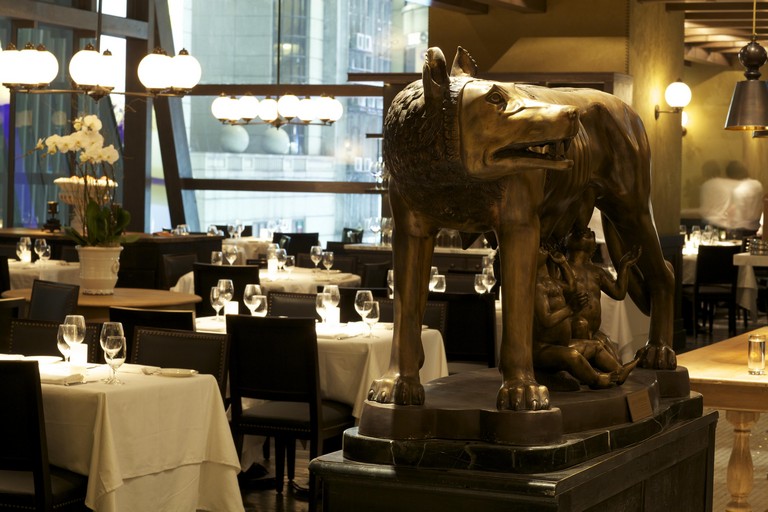
Hearty New York Italian eatery LUPA is one such establishment. The newly opened restaurant has squarely positioned itself in the all-important sweet-spot between casual lunch establishment and formal dining hall. At 5,500 square feet in size, the sprawling interior is equally fitting for large events, particularly when combined with the 2,500 square-foot outdoor terrace, which in and of itself is perfect for a small cocktail affair.

Also new to the district is the latest serviced office complex from Compass Offices. The exquisitely furnished establishment takes up the 16th and 17th floors of the Aon China Building which, situated in the heart of the district, an ideal place to base yourself if you’re in town for a business trip.

The building itself has recently undergone renovation, and now boasts three ultra-posh elevators that are sure to impress even the most pernickety of business clients.

The spaces on offer are each beautifully furnished and offer equally beautiful city views, together with all the connectivity one would expect from a modern office. The shared office facilities include a large private lobby and three well-equipped meeting rooms with comfortable seating for four, six and 14 people.

Compass Offices also houses a banking-grade data centre on site for those with more demanding information technology needs.

Virtual offices are also available and start at HK$598 per month. Meeting rooms on their own go for about HK$50 per 15-minute session. Custom office fittings are also available for long-term clients.

Originally published in South China Morning Post, June 2012