The Keyless Keyboard

The keyboard that fits in your pocket.

With technology becoming increasingly wireless and more mobile everyday, this projection keyboard was bound to come along sooner or later. Back last year, around the launch of the iPhone 4S when the usual rumours and speculations surrounding any iProduct were close to breaking point, a nifty video came out which depicted a conceptual iPhone 5 device that came with a virtual keyboard projected by the device itself.

Though the imaginary device and most of its features were simply castles in the sky (iPhone holograms anyone?), a few companies took to the virtual keyboard idea and these have since been released.

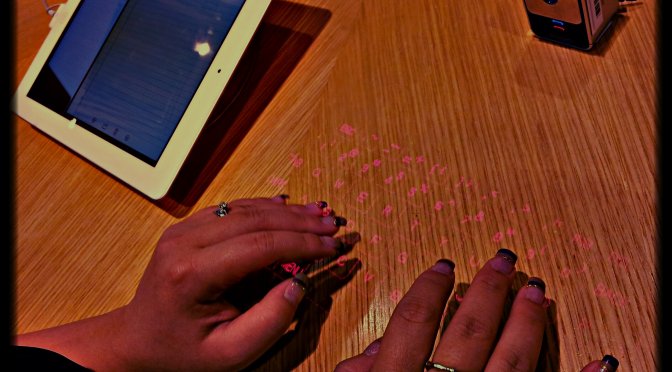
Celluon has released the best of these virtual projection keyboards in the form of their ingenious Magic Cube. About the size of a pack of cards, the small rectangular-shaped device looks like something straight out of Star Wars, and its amazing laser projection and motion detection technology would make a great travel companion for mobile, tablet, and laptop devices.
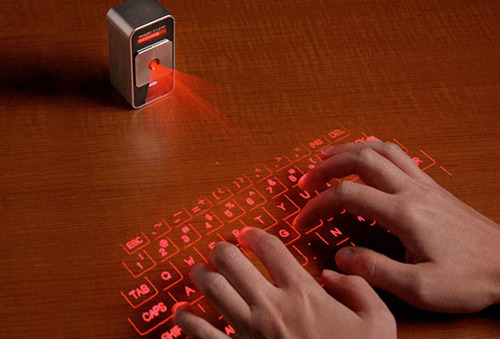
The pros are that it connects via Bluetooth or USB, and is compatible with a whole array of devices including iPhones, iPods, iPads, computers, notebooks, smartphones and many tablets. However the cons are that it only projects a condensed QWERTY keyboard layout (there is no right side number pad). In addition, it is not for use with Kindle devices (they do not support Bluetooth or USB keyboards) and the projected multi-touch mouse pad and keyboard can be quite tricky to use. Nevertheless, the unit seems to get more responsive and accurate the more you use it (maybe it just takes time to get used to) and it’s still an amazingly forward-looking and cool gadget.

The future is here…almost.

Video here.

Features:
– 38 x 75 x 29 mm – Communicates and connects with devices wired via USB or wirelessly via Bluetooth
– No drivers needed
– Runs for up to two hours of continuous typing when wireless – Charges when connected via wired USB
– Projects a condensed QWERTY layout with a multi-touch mouse pad
– Keyboard function compatible with any operating system supporting the USB HID class or Bluetooth HID profile. Multi-touch mouse mode for Windows 7+ only. Specific compatible systems include Win XP SP2+, Vista, Win7, Mac 10.4+, iOS 4.3.5+ (iPhone 3GS and later, iPod Touch 2nd generation and later, all versions of iPad), Linux and others supporting standard Bluetooth HID keyboards. Android 2.0+ compatibility limited to phones and devices that include Bluetooth keyboard support.

Originally published in Kiosk Magazine, April 2012
Designing for Junior

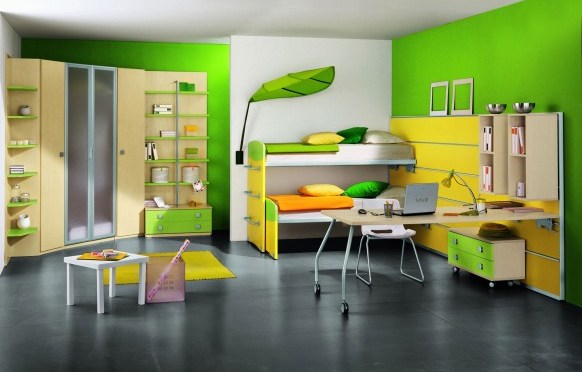
While it may seem pretty straightforward, designing a children’s room can be quite a difficult yet rewarding procedure.

As a place to spark imagination, children’s bedrooms are always uniformly colourful. They always feature elements which are designed to set off creativity. Children’s bedrooms are spaces where parents and children share dreams, excitement and comfort – a room for building bonds.

Continue reading Designing for Junior

Interior Finesse – The Hampton

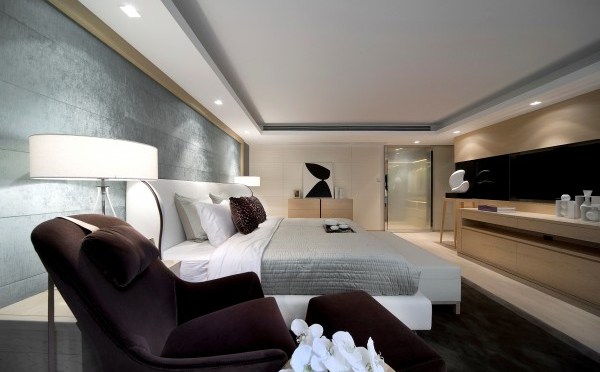
This apartment features some of the finest materials, ornaments and furnishings from some of the best interior suppliers in the industry, which blend perfectly with the cream and dark black colour tones that run throughout.

Located in the leafy residential setting of Happy Valley, The Hampton is an exceptional portfolio of apartments boasting distinct designs for each of the eleven individual 2,500 square-foot plus units. Equal dashes of naturalism and Haute Couture, the pinnacle of high fashion, served as the inspiration for this particular one, which was designed by Steve Leung, the local home-grown and now internationally-renowned architect and interior designer.

Continue reading Interior Finesse – The Hampton

HK employees struggle to maintain work-life balance

The lines between work and personal lives in the city are blurring, according to staffing and human resources consulting provider Randstad.

With detailed feedback from 405 local employees, the new survey – part of their debut Workmonitor Report for Hong Kong – captures sentiments towards local work practices.

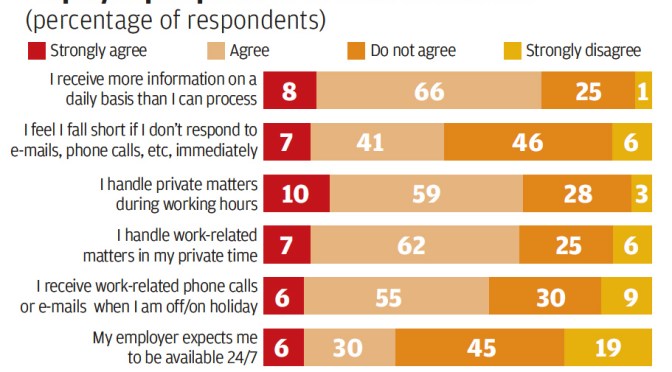
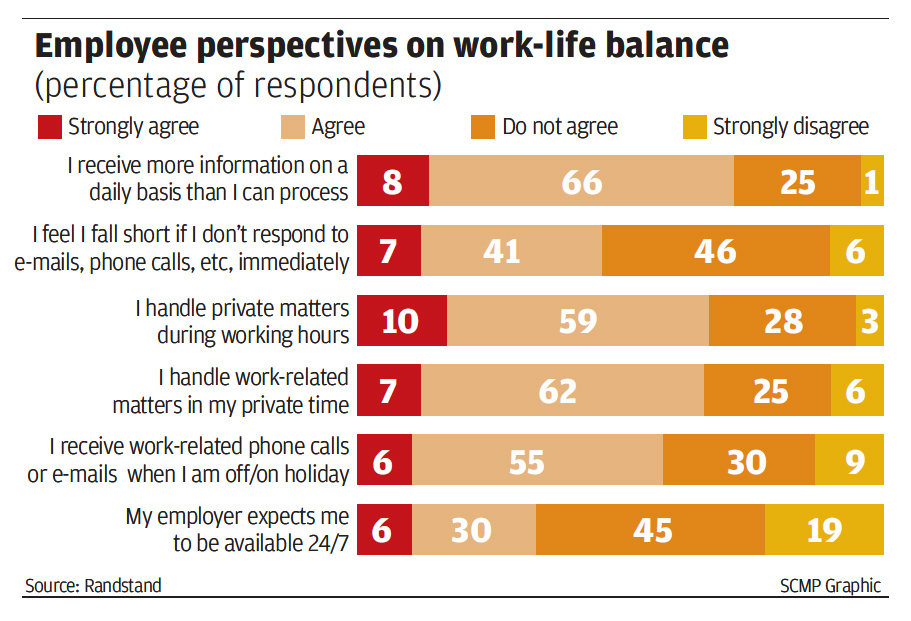
Of those polled, 36 per cent said their employers expect them to be available at all times, while 61 per cent reported receiving work-related phone calls or e-mails during their time off.

Commenting on the results, Brien Keegan, director of Randstad Hong Kong, says that they have done similar surveys in other countries, but a notably larger proportion of local respondents claimed to work outside office-hours, a fact he attributes largely to the city’s role as a financial hub.

“We are literally in the centre of the world here in terms of our access to global markets. And to maintain good business relationships, one often has to keep in sync with other time zones,” he says. “This practice puts a severe strain on effective work-life balance and can also have a negative impact on productivity in the workplace.”

The survey also showed that 69 per cent of the respondents said they tended to deal with private matters during work hours, while 68 per cent indicated they handled work-related matters in their private time.

Keegan believes that to counteract this “blurring”, staff and employers should set guidelines defining priorities.

“The balance between working and living is really an individual preference, so employees and employers should set boundaries and expectations and find what is personally and professionally important,” he says.

Keegan notes that striking a balance between work and life commitments can be a good thing for both workers and their managers. Flexible working arrangements, he adds, can increase productivity, aid employee retention and enhance staff engagement.

Nevertheless, Keegan concedes that flexible arrangements are not for everyone.

“While some part-time workers might give 40 hours of work on a 20- hour timesheet, other employees need the routine, support, guidance and social structure of a traditional workplace,” he says, adding that this may explain why 65 per cent of respondents also indicated a preference for face-to-face contact.

Keegan expects work-life balance to become an increasingly crucial issue. “One of the things we need to think more about is how to create a more efficient workforce, especially since the war for talent is about to pick up again,” he says. “Providing flexible work options [for some] is going to be really important.”

Originally published in South China Morning Post, March 2011 

Wonderfully Unconventional – W Retreat Koh Samui

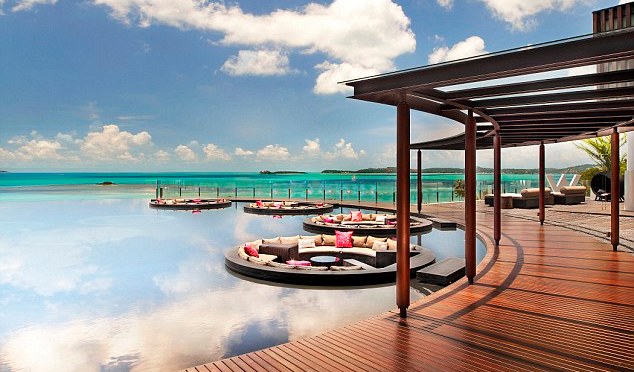
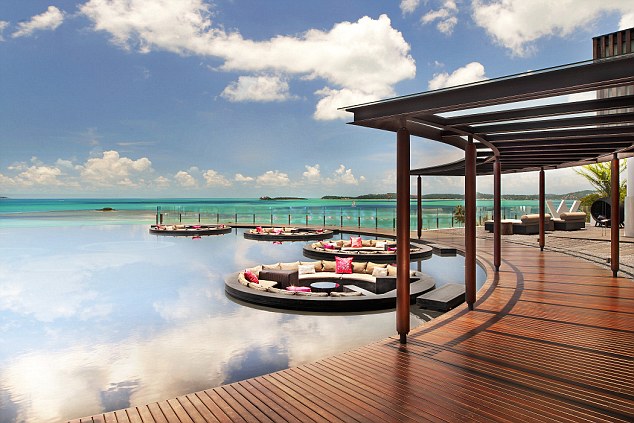
The overuse of words beginning with the letter ‘W’ employed at W Hotels around the world gets kind of galling after a while, but this is one annoyance we are willing to forgo at the W Retreat Koh Samui, which really is, by definition and design, whimsical and wonderful (*shudder*). At the entrance one is greeted by interactive digital floor projections and a large architectural recreation of a lily pond complete with glowing psychedelic floating globules and sunken seats that look like over-sized lotus flowers. From here on in a whole world of chicness awaits where quirky design features abound and create a serious sense of place. In the 75 colourful glass-walled pool villas red marshmallow-resembling light fixtures, modish asymmetrical ceiling fans and other playful eye candy combine to make an impact on the senses, whilst around the resort a number of alluring food and beverage outlets beckon and entice. These include the open kitchens, dramatic glass ceilings and vivid bright blue tones of The Kitchen Table; the raw wood, concrete, and glass elements of the beach-side Sip Bar and Namu Japanese restaurant; plus a healthful juice bar connected to the Away Spa (which boasts Asia’s first Thai/Mexican steam treatment facility). Being a W property, the exceptional design is matched by an exceptional location, which features two separate beaches that converge at a sandy tip. While villas scatter a hillside on one side off from the beachfront, there is a flat plain that stretches out on the other side, overlooked by the various levels of public areas that impressively cascade down the hillside. It is all just a day’s work for this hotel group of cool unconventionality.

Originally published in Today’s Living magazine, May 2010

Gentrifying Dining – 208 Duecento Otto

Although it’s been happening for a while, 208 Duecento Otto officially secures Sheung Wan’s position as the trendy gentrified dining extension to Lang Kwai Fong and Soho, and when one experiences the idiosyncratic interior one can see why the official transformation of a district can rest on a single restaurant.

208 Duecento Otto is the kind of restaurant that makes us design addicts happy at Today’s Living. Although the design is stunning, this time we are impressed with more than just the aesthetics as the story behind the restaurant is just as appealing, and the people who put the hard work into the restaurant are just as deserving as the designers. Originally a two-storey frozen meat storage warehouse at the end of Hollywood Road, the Singaporean founder of JIA Boutique Hotels – Yenn Wong – decided to build on the success of her eccentric Philippe Starck designed hotel and, combining an attention-grabbing design scheme with a New York-style Italian-American bill of fare, this captivating restaurant was born.

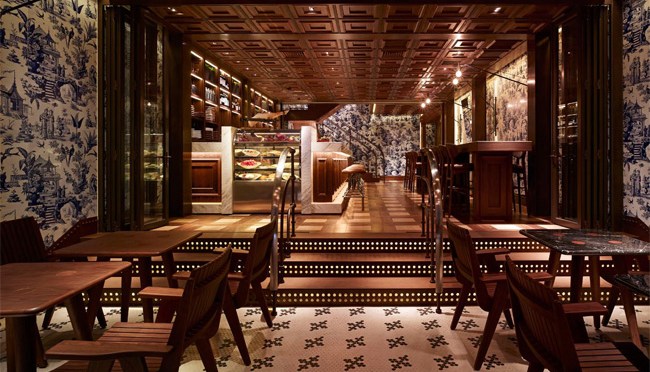
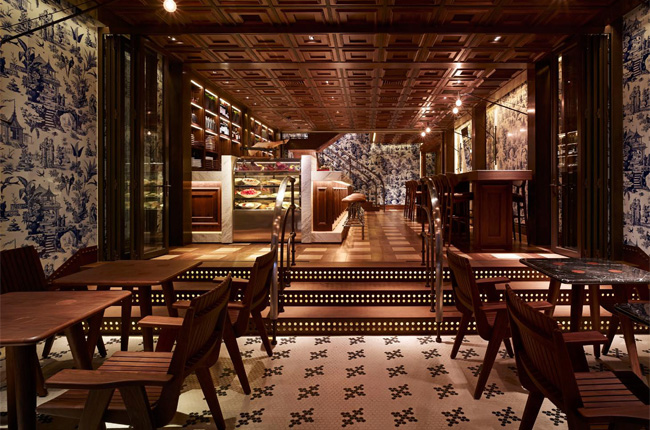
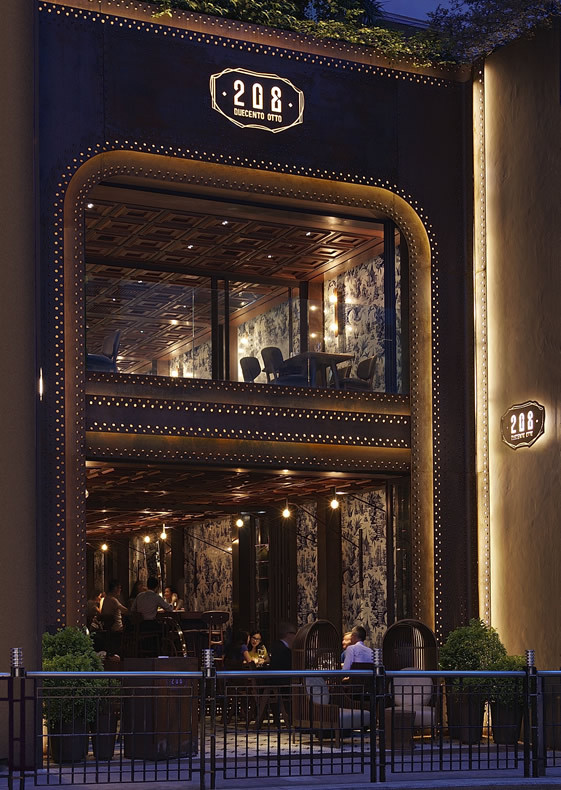
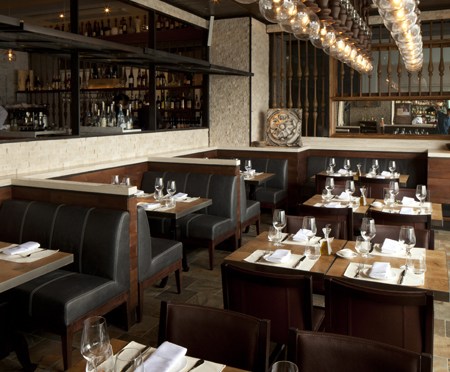
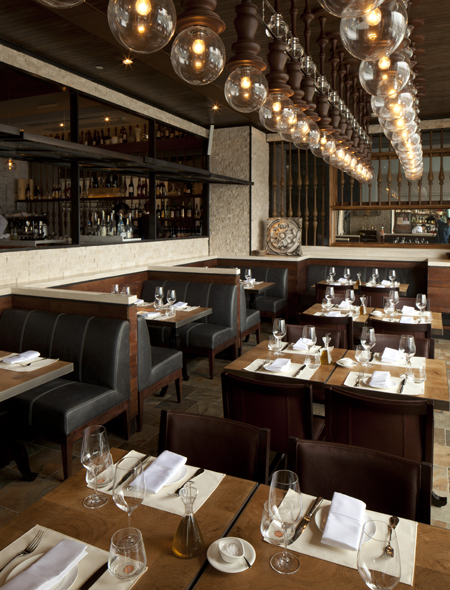
208 duecento ottoThe main district-changing factor of 208 Duecento Otto is the eye-popping design of the place, with an attention to style and detail running inside and even out. As the first overseas project by a Turkish design firm called Autoban, the interior is a spectacular bohemian work of art, and it is clear to see this design firm won’t be strangers abroad after this. The exterior is marked by a striking intentionally-oxidized rustic-looking iron frame, which somewhat resembles an oversized Louis Vuitton suitcase. This is appropriate; given that Chef Vinny Lauria’s cooking style has been defined as “a New York interpretation of rustic Italian cuisine.” Inside the rusticness continues in the spacious bar area on the ground floor where sophisticated walnut wood squared panels decorate the ceiling and flooring, and somehow complement the blue and white ceramic wall tiling, which also bring in an extra touch of orientalism. Some dramatic overhanging lights stand out as well, appearing alongside gorgeous textured wooden tables, a slick marble bar counter, refined leather bar stools and old-looking holed stairs, which have a slightly nautical feel about them. Upstairs, there is more of a sophisticated ambience, with the walnut wood ceiling and flooring continuing alongside more ceramic tiles, but here they are complemented by some leather sofas, an authentic wood-fired Napoletana pizza oven (specially imported from Naples), and a spot of natural light coming in from the large window out the front.

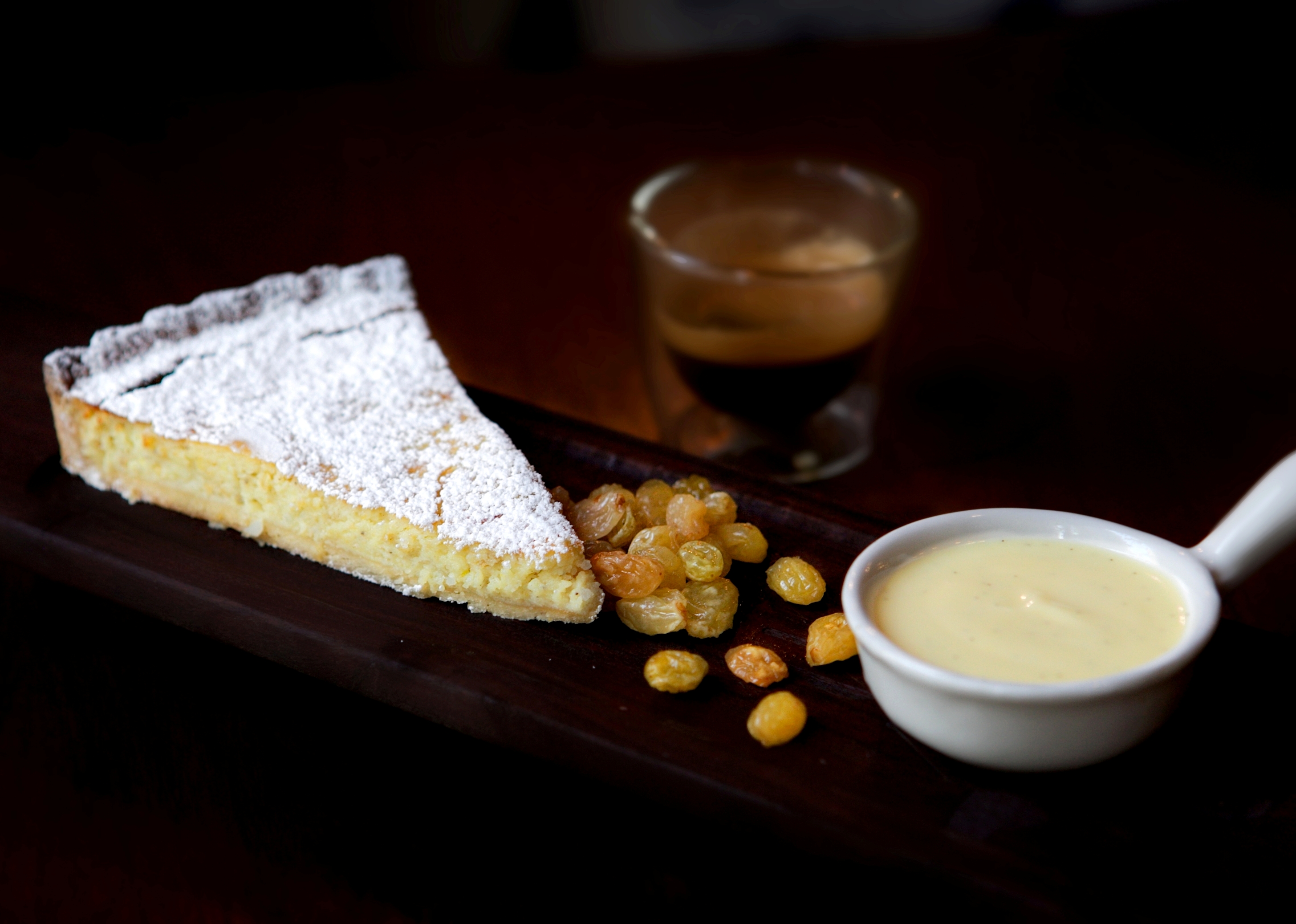
Pastiera Napoletana Of course with such a spectacular design scheme it would be a crime if the food failed to make an impression as well, and luckily the Italian-American fare it does not even come close to disappointment. Overseen by Chef Vinny Lauria, formerly a cook at Mario Batali’s famous Babbo inNew York City, there is a home-made vibe to the food, with every dish prepared on-the-spot using the freshest ingredients available. Apart from the pizzas and antipasti, these are not your generic dishes, with many of the items featuring top-quality ingredients and a signature touch of creative flair, much like the rest of the restaurant.

Originally published in Today’s Living magazine, August 2010

Harbour-side NYC – Al Molo

Al Molo is a hot new Tsim Sha Tsui joint which brings celebrity chef Michael White’s signature New York twist on Italian dining to the edge of Victoria Harbour.

Opened to much deserving fanfare last year, Al Molo is one of the finer restaurants in the vast commercial complex that is Harbour City. The stunning 7,000 square-foot venue is the collaborative product of a partnership between the award-winning New York chef Michael White and the leading local restaurant group, Dining Concepts. While these leaders took care of the management and food, the New York design firm Avroko and Hong Kong’s Zanghellini Holt took care of the interior design.

Luckily for locals, all the involved parties delivered in their designated areas, with Al Molo now featuring an appealing New York restaurant design aesthetic and an enticing menu of Michael White’s creations. Overseen mostly by White, the concept of the restaurant is ‘New York Italian,’ which is a popular Manhattan cuisine involving flavoursome generously-portioned Italian food which White has perfected and served up in homey Italian-themed settings for years. In fact his perfection has secured him many awards and he is most known for his two Michelin star rated New York eatery Marea, which was honoured as ‘Best New Restaurant in America’ and got White nominated as ‘Best Chef in New York City.’

With Al Molo, White has not held back in any way and he has successfully managed to export his hearty Italian New York cuisine to a deserving site just across the water from the Star Ferry pier in Tsim Sha Tsui (hence the name Al Molo, which means ‘The Pier’ in Italian. This site is one of pure stylishness, with the massive space featuring old Manhattan restaurant inspired aesthetics. What this translates to is rustic-looking plank ceilings, raw exposed brick walls, long fine marble countertops, characteristic mosaic flooring and plenty of carved wood. Spotted throughout the restaurant are also industrial iron fittings and eye-catching decorative lighting which all, of course, rival the ever-impressive skyline of Hong Kong that attractively glares into the restaurant via the tall windows and the outdoor terrace, offering up alfresco dining right by the harbour. Other key features of the restaurant include semi-open cooking stations that flank both sides of the massive dining room, a walk-in bread-baking oven and an eruditely-stocked bar. In terms of seating, the restaurant offers various dining setups which include relaxed casual dining on the terrace, more private seating in black leather booths inside, plus some other more communal longer dining tables to accommodate bigger parties inside as well.

Nevertheless, while the interior is undoubtedly striking, the menu is equally extraordinary with some of White’s imported signatures naturally appearing here in Hong Kong where the appointed executive chef Jimmy Everett, a protégé of White, does a good job of representing the ‘king of Italian cooking in New York.’ White’s signatures include handcrafted pastas swathed in indulgent sauces plus his famous antipasti offerings. Headlining the menu also are seasonal fish dishes including local sea bass with artichokes, roasted peppers, riso nero and dates and New Zealand john dory with grilled peach, almonds, salsa verde and roasted shallots. Other highlights include dishes of hand-selected meats such as roasted guinea hen with celery root, asparagus and cippolini agrodolce; herb roasted lamb saddle, farro, cavolo nero plus spring onion and braised veal shank with bone marrow, saffron risotto and sautéed spinach.

Originally published in Today’s Living magazine, March 2012

Ozone, Ritz Carlton Hong Kong

Unless you’ve been reading censored news, you’ve probably heard about Ritz Carlton’s return to Hong Kong, and the crowning glory of the hotel is Ozone, the highest (and quite possibly one of the most stylish) bars in the world.

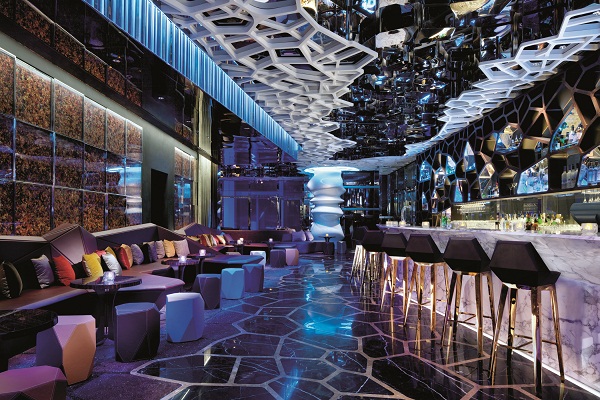
Ritz Carlton Hong KongThe Ritz-Carlton Hotel Company has been pretty busy of late. After the 2008 closure of their elegant property in Central the group went silent for a while both here in the city and the region, but now they have returned with a palpable bang, as The Ritz Carlton Hong Kong and their latest properties have shown. Recently the brand has changed their positioning in the market slightly and a slight shift in their design philosophy and service evolution has emerged across their stunning portfolio (particularly in the newer properties). Up on the top floor of The Ritz Carlton Hong Kong, Ozone is a testament to this fact, with the bar and light eatery boasting top-notch service and a conspicuously eye-goggling design scheme.

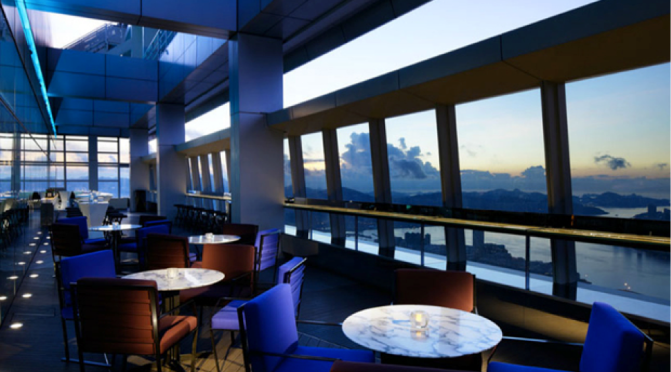
While the ICC is sadly not the highest building in the world, Ozone is, vertically speaking, the highest bar in the world – period. This alone is reason enough to visit the 118th floor venue, but thankfully this is not the only incentive, with the stunning views complemented by top-quality drinks and food, fine service, plus a stunning interior. The interior design was overseen by Masamichi Katayama and his self-owned company Wonderwall Inc., a design company with a difference that has an incredible catalog of exclusive interiors which includes impressive store spaces designed for Bape, Uniqlo and I.T, plus a Tokyo restaurant interior for Harrods, a Parisian restaurant called Collette and more. Although Wonderwall Inc. is anything but typical, their typical atypical design style can be seen all over Ozone, with playful contemporary plastic features appearing alongside first-rate materials and creative atmosphere-building gilding. There is a distinct Alice-in-Wonderland vibe about the whole interior, which was created around the theme of an ‘Edenic Experiment’ – “a man-made environment of nature in an imaginary world,” as the designer overview states. In other words, blown-up inspirations of nature can be seen everywhere, from the dim neon color-changing forest-like entrance through to the beehive-resembling ceilings and marble-shaped bamboo.

Ozone-Ritz-Carlton-Hong-KongAfter being zoomed up to Ozone in an elevator which reaches ear-popping speeds of nine meters per second, one is greeted by an atmospheric entrance area, where layered mirror ceilings, curtain-shaped walls and rock-resembling floor patterns tease and tantalize one’s expectations before entry. Once inside one is greeted by an eccentric white pillar which resembles oversized stacked marshmallows and acts as a visual centerpiece. Further in the interchanging neon colors continue to shine out along the ceiling, where they are complemented by beehive-like ceilings, geometric shapes and flower petal patterns on the walls below. The beehive shapes run behind the bar as well where they take on a web-like appearance. Along from the main bar is a sushi bar, and things get taken down a notch here, where a whitewashed marble counter is matched by marble bamboo-shaped pillars behind. In the main dining area the hive ceiling continues, but globular bubble light fittings add a different touch here. Outside, in the semi-al fresco area where 12-foot walls of glass offer panoramas of the city, there is another bar, and this one takes on an iceberg appearance. Various bar tables correspond with the white ice theme while a few rattan seats and bar stools provide a nice place to admire the view from.

Of course all this perfection would not be complete without a good selection of food and drink, and luckily, Ozone does not disappoint in this area either. Covered with custom-made holograms, the menus contain wonders such as wines that hover around the $100’000 mark, custom-made cocktails and signature drinks, plus a fine selection of sushi, sashimi, tapas, tempura and caviar.

Originally published in Today’s Living magazine, July 2010

Opening the Window – French Window, IFC

Making much better use of the space than the eatery that previously occupied the site is French Window, coming in as a grand addition to the Hong Kong fine dining scene up on the third floor of ifc Two in Central.

Like most things French, The French Window has an undeniable flair about it, with the interior bordering on art and the food quality coming close to perfection. However, while there is a touch of Frenchness about the interior and there is a French-inspired menu executed by Michelin-trained chef Mickael le Calvez, these are the Frenchiest elements of the restaurant, with the restaurant managed instead by the un-French Miramar Group; the concept helmed by Singapore’s Justin Quek; and the interior having been actually overseen by local design prodigies from AB Concept. Nevertheless, the French theme is still apparent throughout, with the interior loosely (and beautifully) modelled around a classical French château, and a erudite selection of predominantly old-world wines available to complement the food.

As a a rising star and modern prodigy of French cuisine, chef Mickael le Calvez does his best to create a nouveau Gallic menu, but the real star of this eatery is the designer Ed Ng, the founder and director of AB Concepts. 
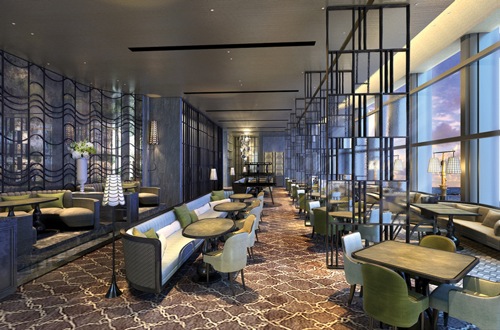
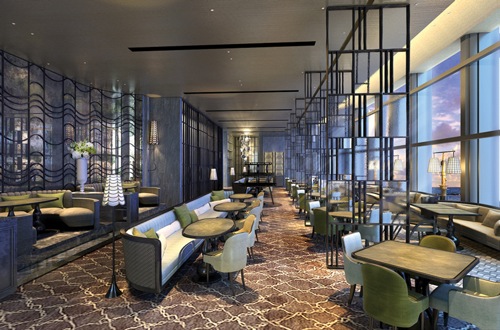
Created with his award-winning design team from AB Concept, the modishly nostalgic interior perfectly complements chef Mickael’s modern takes on French traditional cuisine – which sees thin tender cuts of lamb placed within a crispy tunnel of fried potato in one dish, and features a tantalizing combination of foie gras and beef carpaccio in another. In much the same way, the designers have also used a similar tapestry of styles and techniques in the design of the restaurant interior, with modern textures and colours effortlessly merging alongside purposely aged mirrors and gorgeous oversized hand-beaten wrought-iron light fixtures, inspired by Parisian street lamps. Alongside the antiquated mirrors there are also textured stone tiles and patterned glass screens, which resemble French windows (which are, by dictionary definition, tall glazed casement window panels). It is this kind of meticulous attention to detail that got the restaurant shortlisted for the UK-based Restaurant and Bar Design Awards in the International Restaurant category.

While these words will not be able to do the interior justice, an attempt must be made here, but do keep in mind that The French Window really is the kind of place that has to be seen to be properly experienced. Walking in from the blinding retail haven of the ifc mall outside is like going down Alice’s rabbit hole and entering another dimension, with the long entrance passageway bearing a resemblance to a French promenade (only indoors). Lush vertical garden panels and atmospheric lighting fixtures lead one down into the space of the restaurant, which emerges as some kind of château or salon, with a subtle homelike ambience permeating the space. This homey vibe comes across through the use of cosy fittings such as the soft carpeting, the mosaic floor tiles and the warm dashes of wood. Nevertheless, this homeyness is counterbalanced with a smattering of modish elements, which crop up in the form of the tantalizingly large wine cellar, the uplifting views of Victoria Harbour seen through the massive windows and the refined palette of cool grey, cream, and taupe tones. When paired with chef Mickael’s ambrosially delectable menu, this interior makes perfect sense and the aesthetic beauty of the environment is further enhanced by the food. Together, it is elements like these that give The French Window its class and finesse – this is an eatery to make Hong Kong proud.

Originally published in Today’s Living magazine, May 2010

PDF

Game-changing – Mamoz, Causeway Bay

Situated atop the newly opened Cubus building on 1 Hoi Ping Road in Causeway Bay is Mamoz, the latest dining hotspot that is bringing class to the shopping district.

While mainly known as a shopping area, Causeway Bay has always had a lack of up-scale decent bars and lounges. Sure, it always had karaoke bars and cafés but, apart from a couple of outlets that are few and far between, the district has been deficient in classy lounge venues. However that has been slowly changing over the last few years and Mamoz is a testament to that fact.

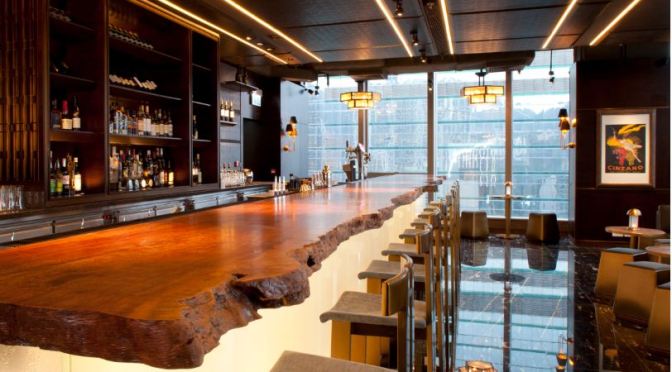
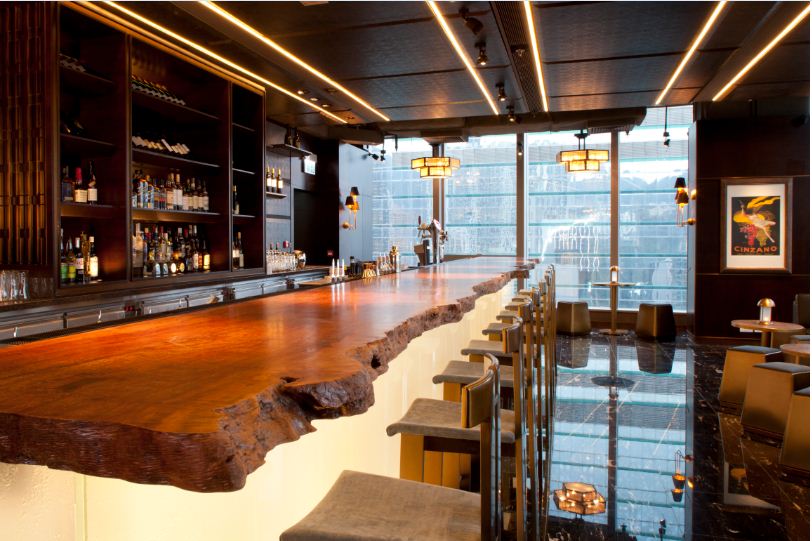
Designed to impress from the moment of entry, Mamoz takes class and chicness to a whole new level, with the two-floor 5,000 square-foot space featuring an impeccable design scheme from end-to-end. These design features include plush black marble floors, an eight-meter-long bar counter carved from a single piece of lacquered Indonesian timber, beautiful patterned damask leather walls and ceilings, unisex bathrooms lined with burgundy and gold mosaic tiles, plus a vertiginous section of glass floor on the landing of the connecting staircase.

The interior decoration was overseen by the team from Gettys Hong Kong (a firm that is most known for their luxurious work with hotels, resorts and casinos who worked on the Hard Rock Hotel in Macau and the Peninsula Hotel in New York), and they really pulled out all the stops, with classiness and luxe into overdrive throughout. As soon as one exits the elevator on the 27 floor, sculpted wall panels and metal partitions greet one in foyer, where subdued lighting enhances the atmosphere further. One past the foyer, the attention-getting space of the bar immediately grabs the eyes, with more subdued lights working alongside Tetris block-shaped metallic bar stools and subtly retro table lamps and paintings. One is also immediately drawn to the large floor-to-ceiling windows which not only bring natural light into the interior, but also provide dramatic views over Hong Kong. Other highlights on this floor include the slightly oriental chandeliers on the corner tables, the pirate wheel-like chandelier in the private area, plus leather-covered seating and glistening cushions. After scaling the frosted stairs to the second floor, the second floor is just as dramatic with more light oriental decorative motifs, more atmospheric lighting and of course, the main feature glass flooring as well.

While the design certainly makes a visit to this place worthwhile, there is also a top quality selection of drinks on offer with some decent food offerings as well. These include liquid concoctions thought up by expert mixologists and a wine list conjured up by local sommeliers.

Originally published in Today’s Living magazine, June 2011

PDF

Welcome to the web portfolio of the Hong Kong writer, photographer, editor and dreamer-creator, Billy Clarke.